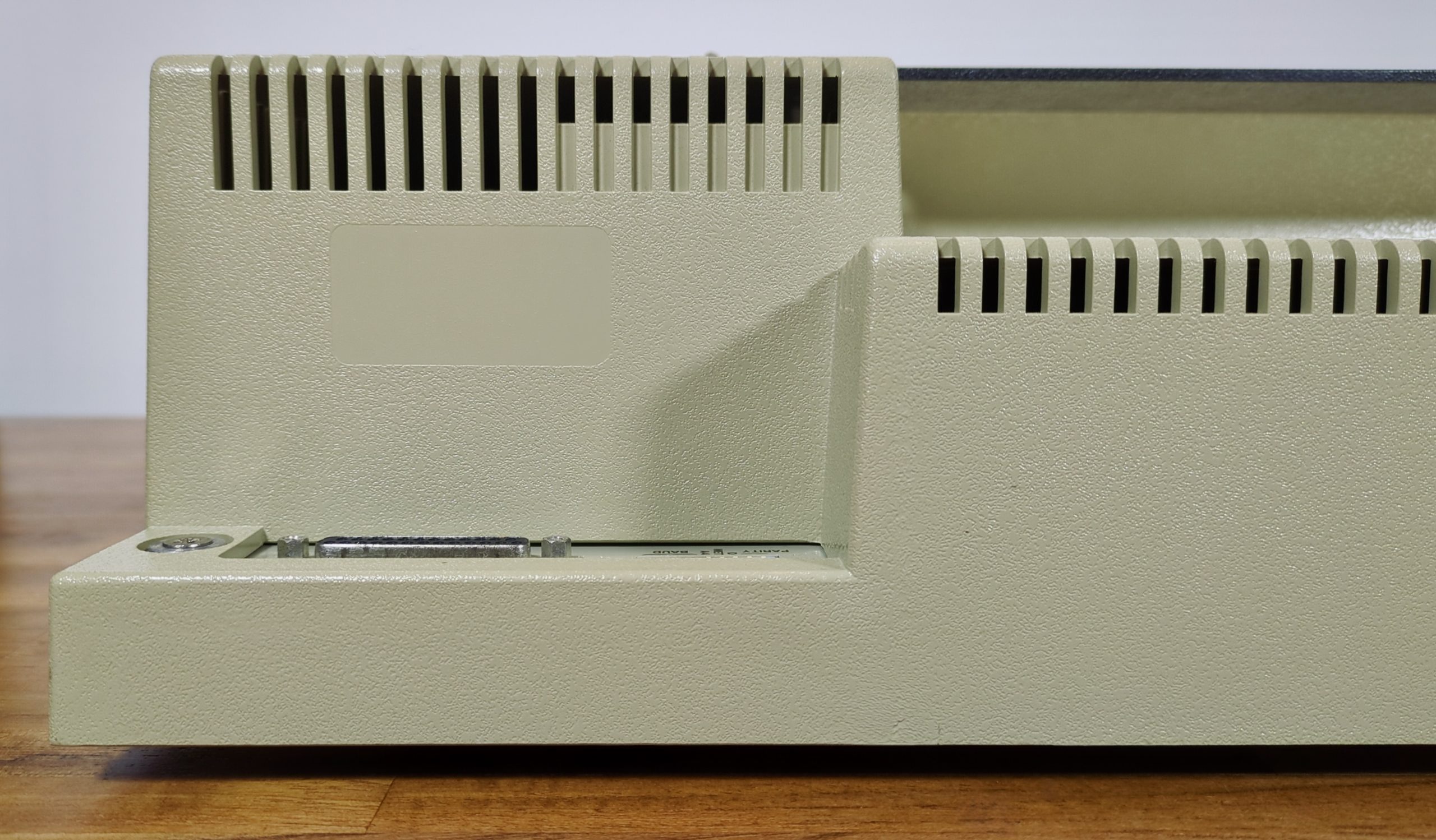
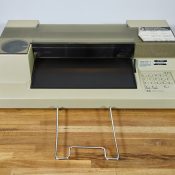
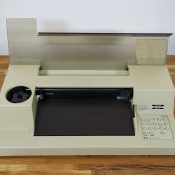
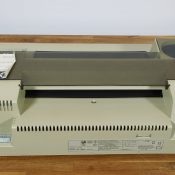
Hewlett Packard HP 7475A Graphics Plotter — For Sale

Color Graphics with the 1983 Desktop Plotter — Ex-PTT, Serviced

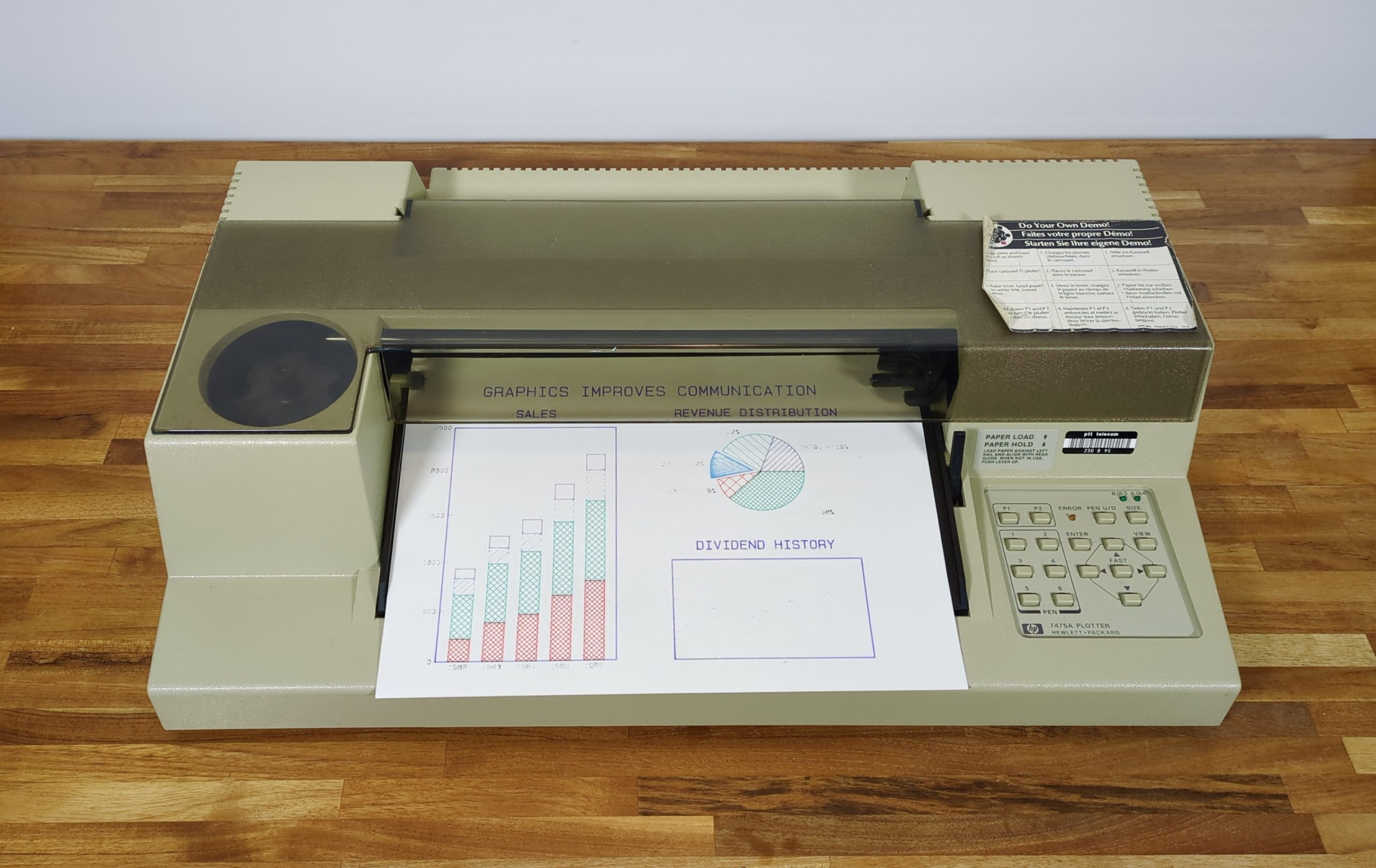
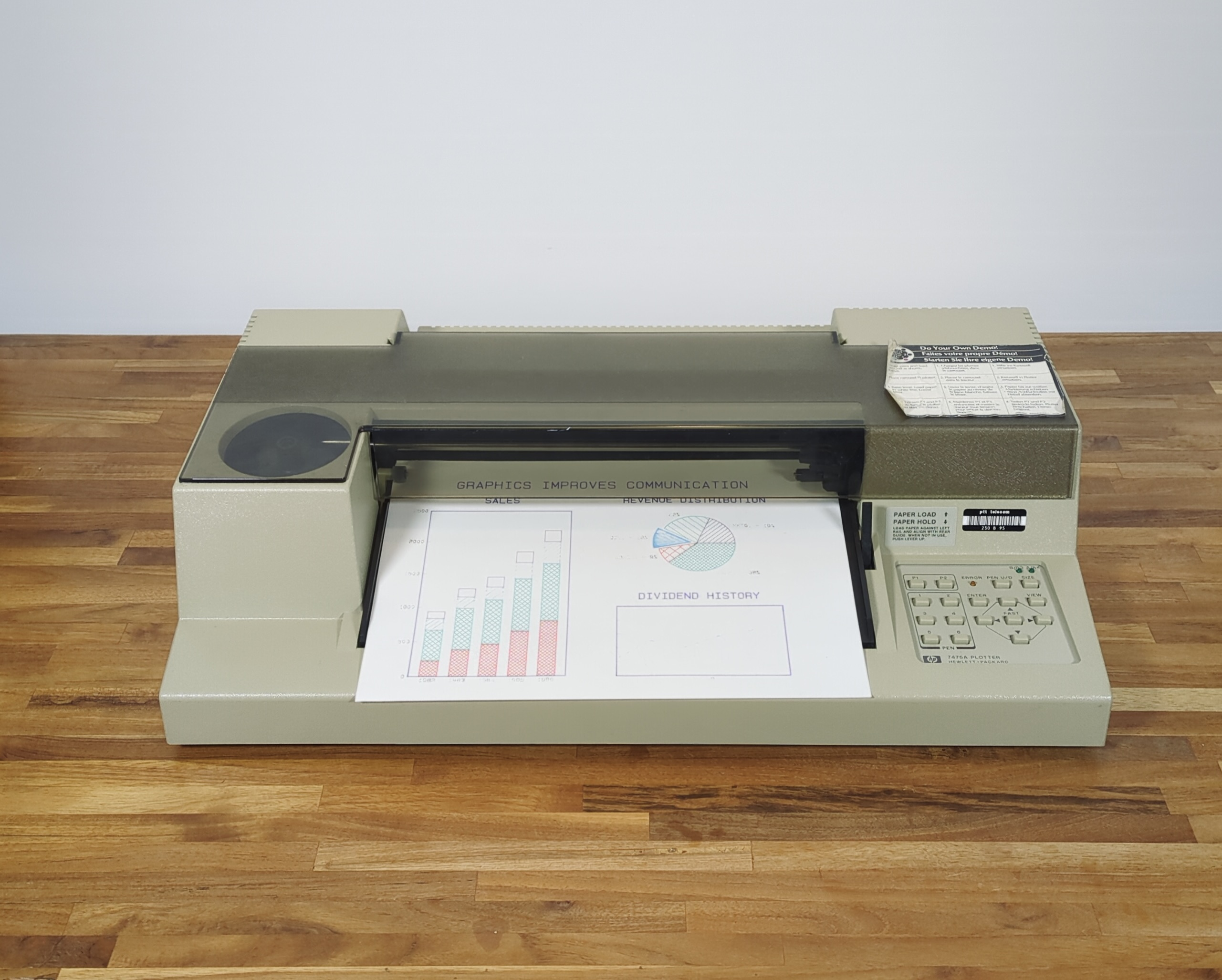
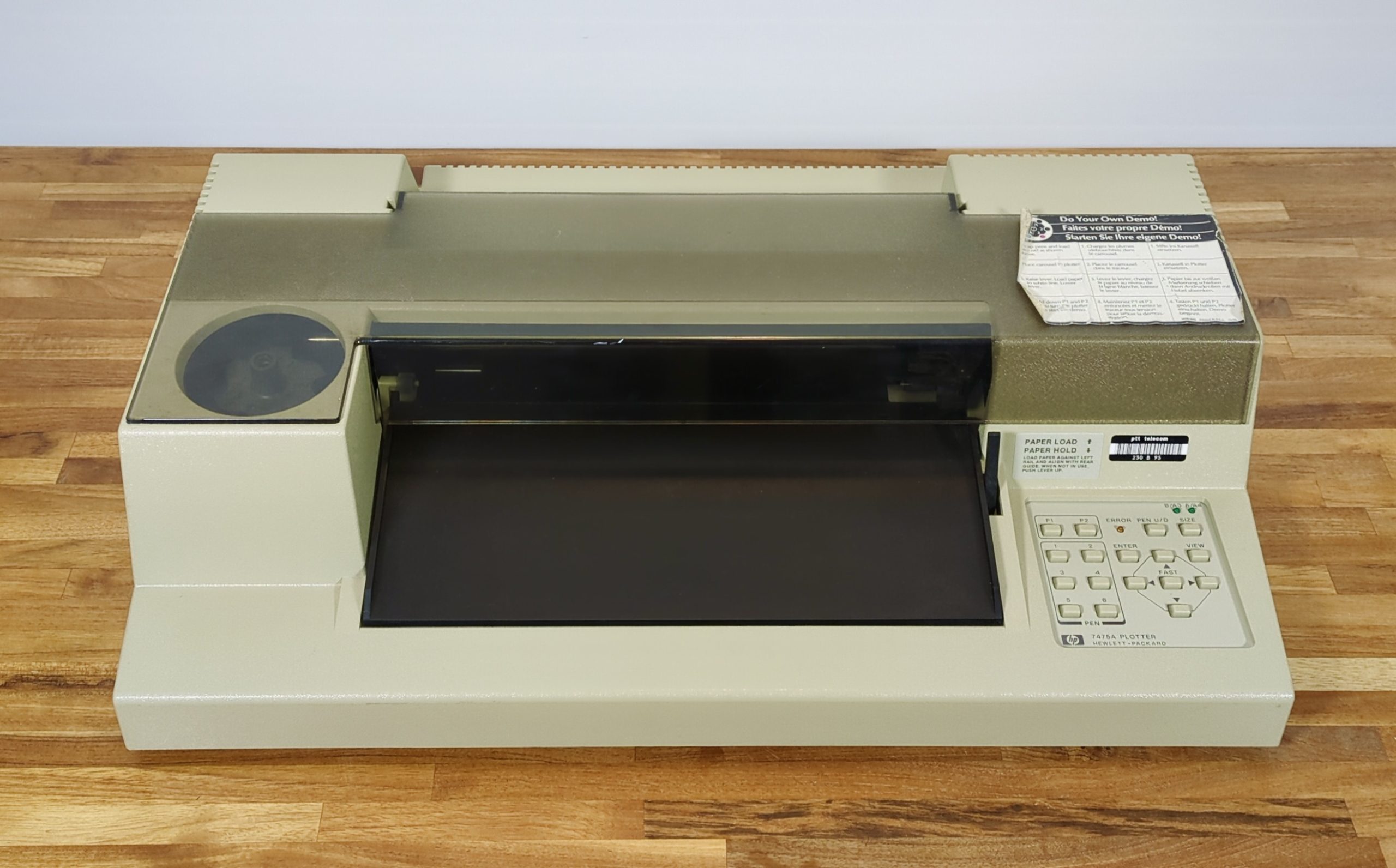
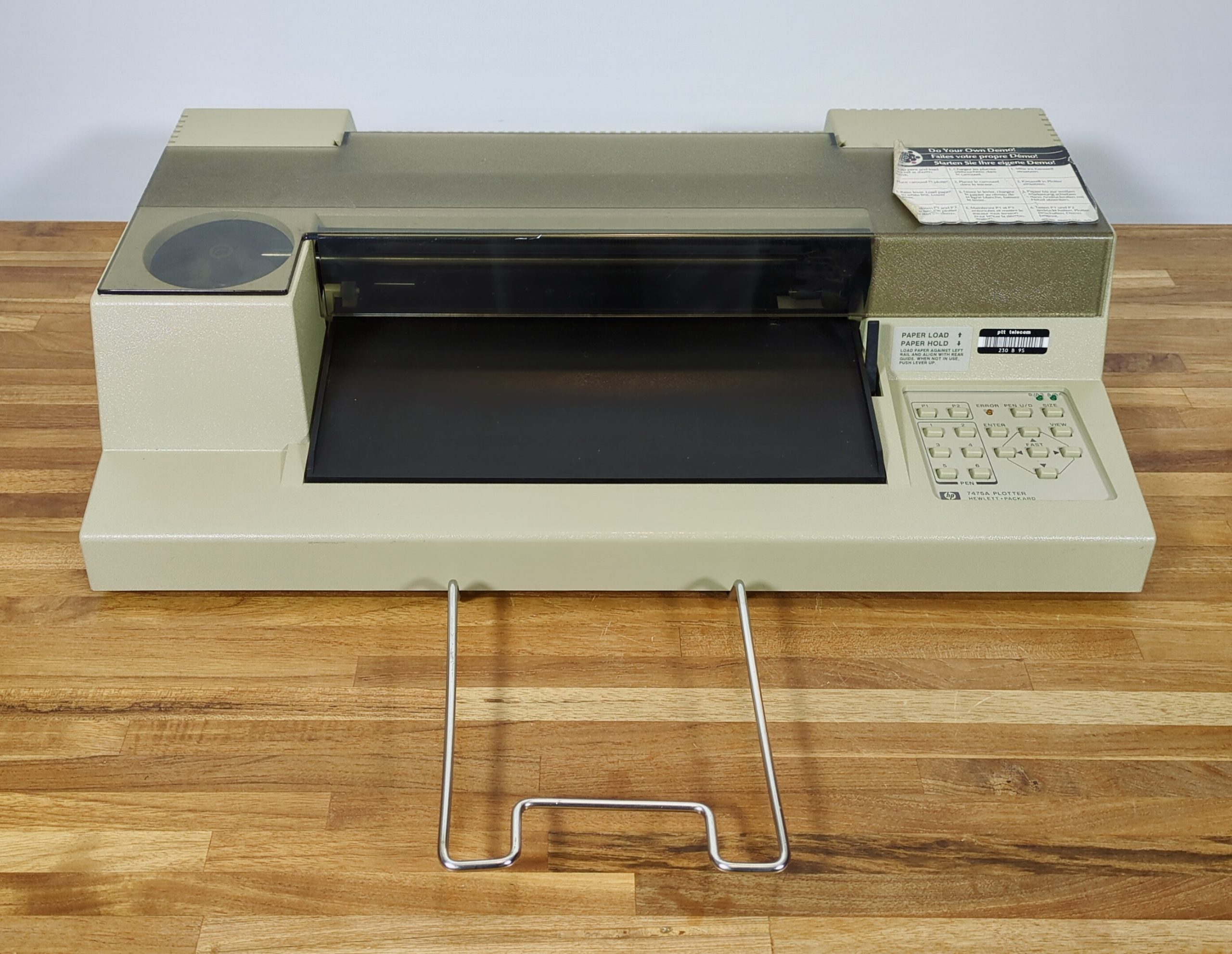
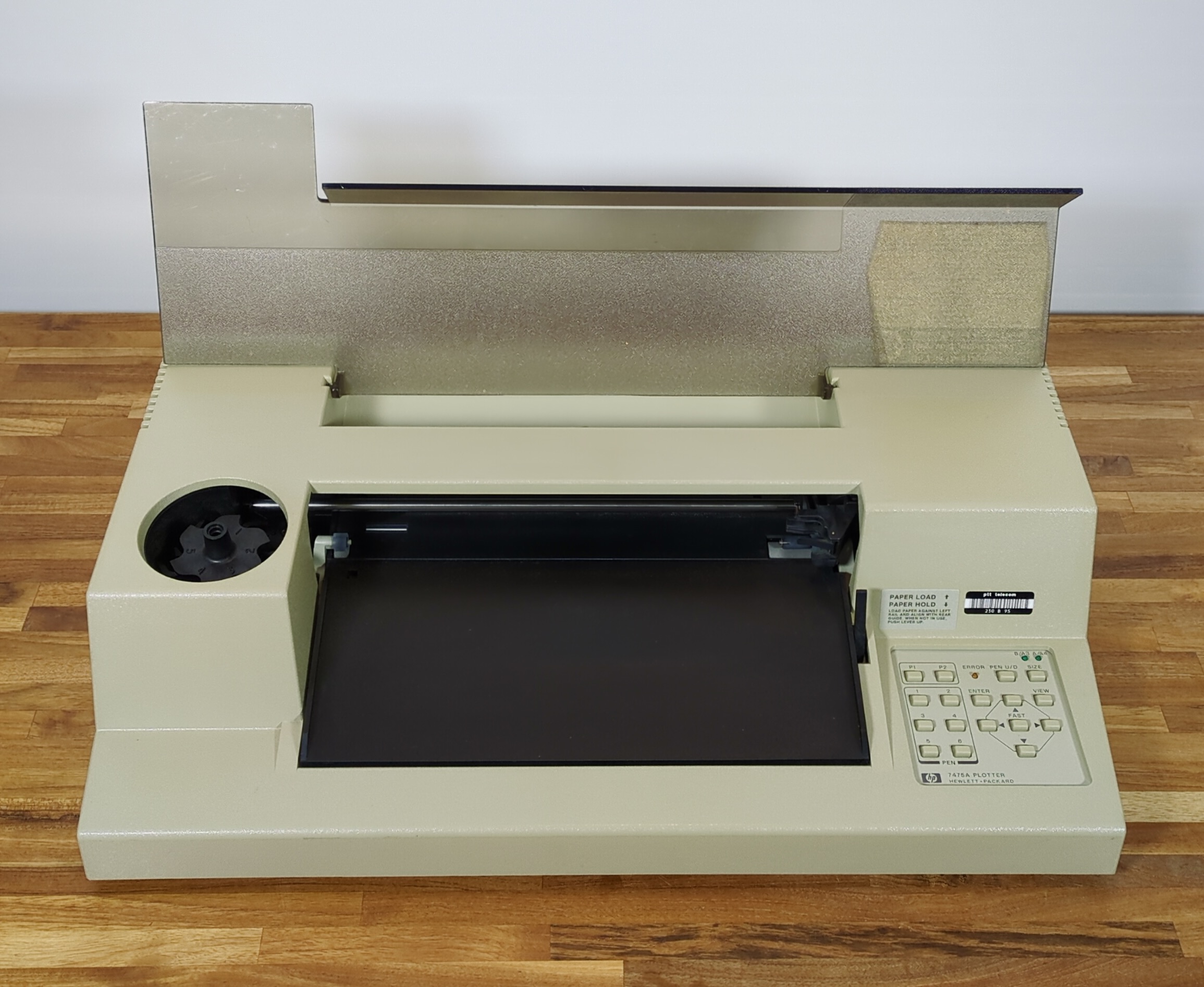
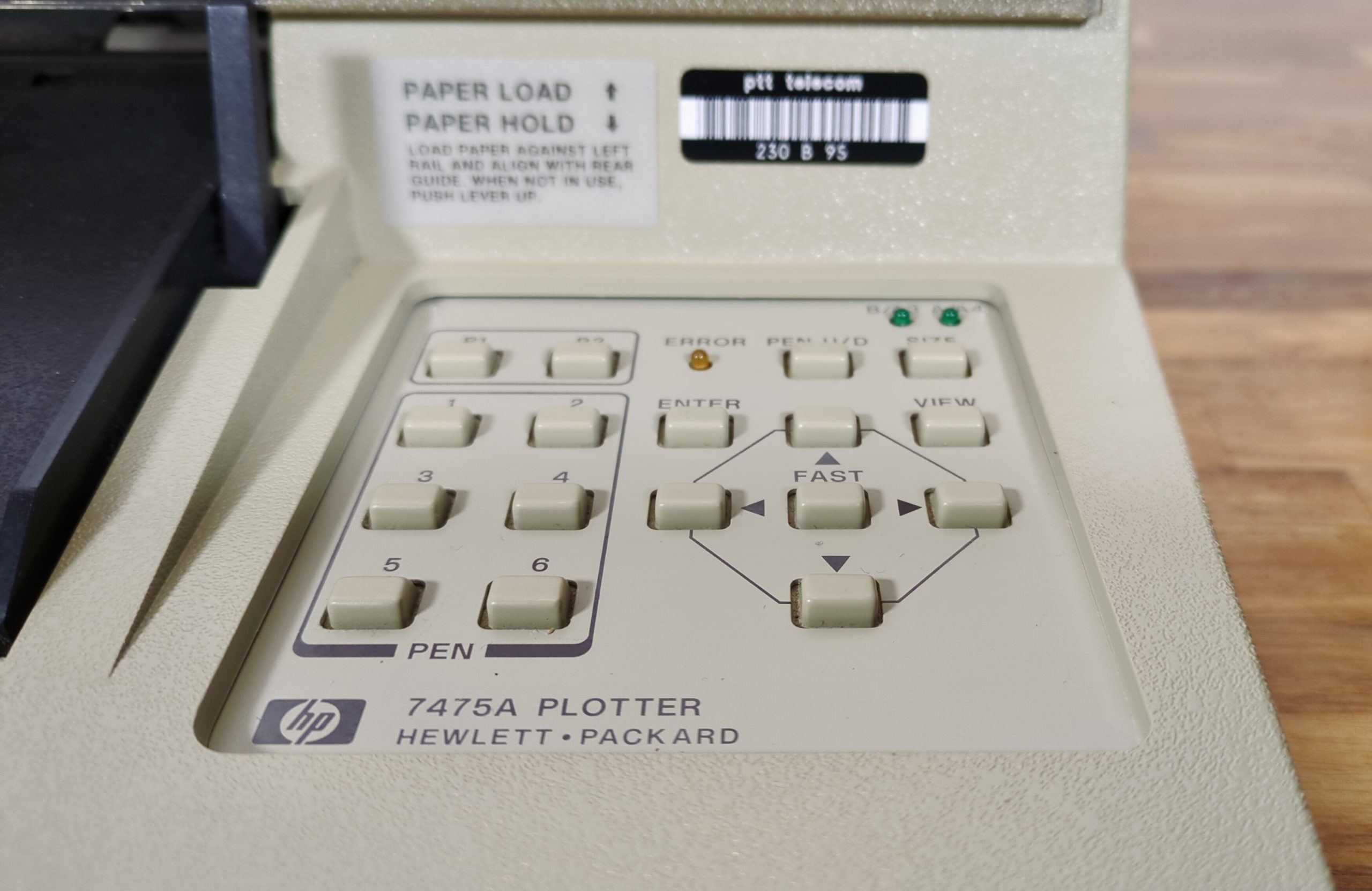
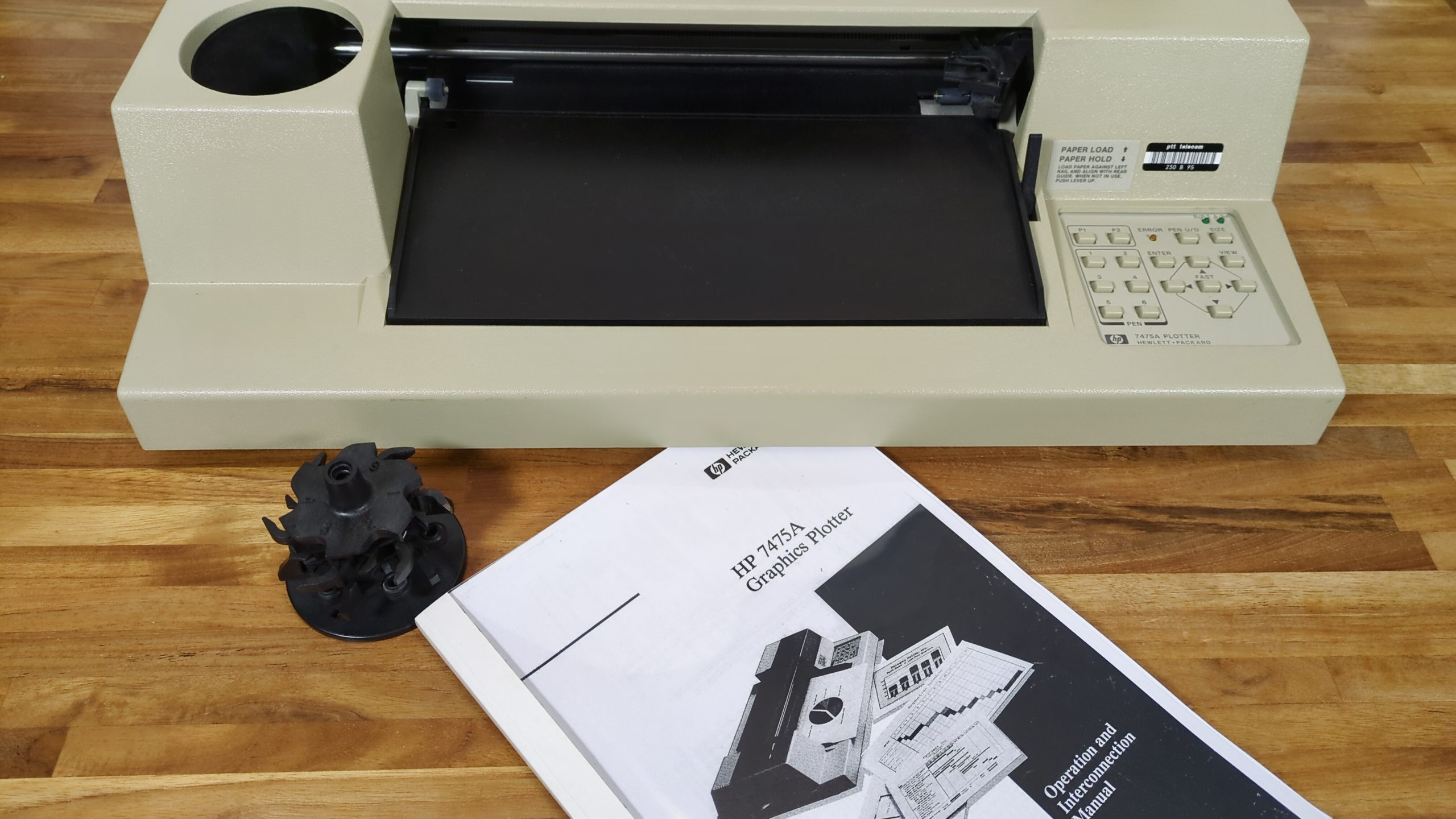
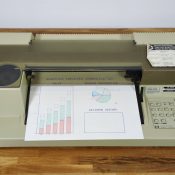
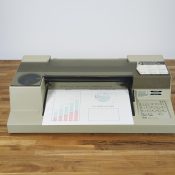
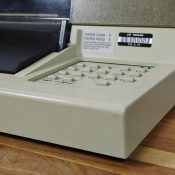
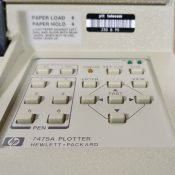
Introduced in 1983 at $1,895, the HP 7475A brought together the best of HP's plotting line: the well-supported HP-GL interface of the 9872, the simpler mechanics of the 7470A, and — crucially — a six-pen carousel, putting it on par with the bigger machines of its rivals while keeping the price and footprint modest.

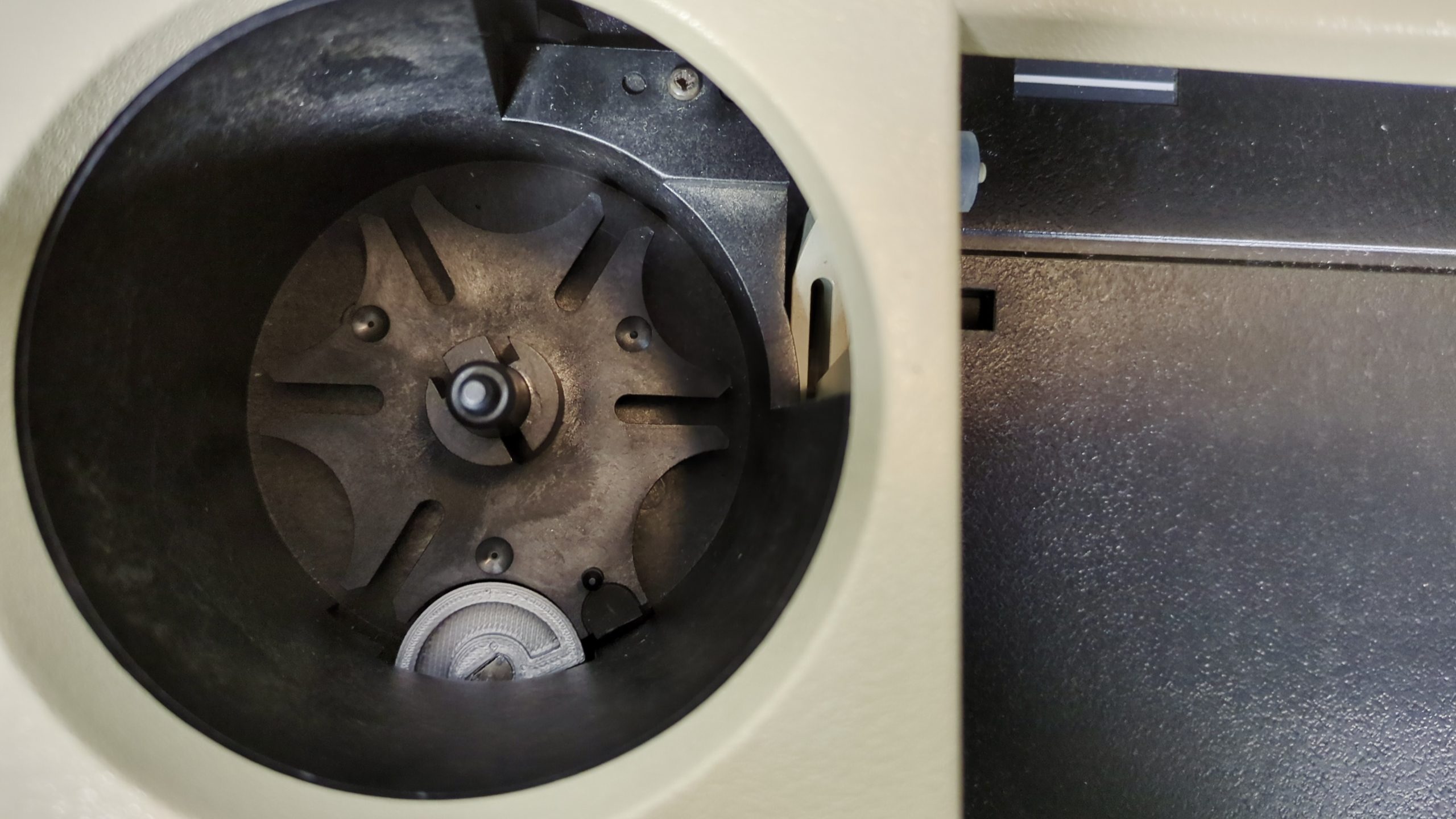
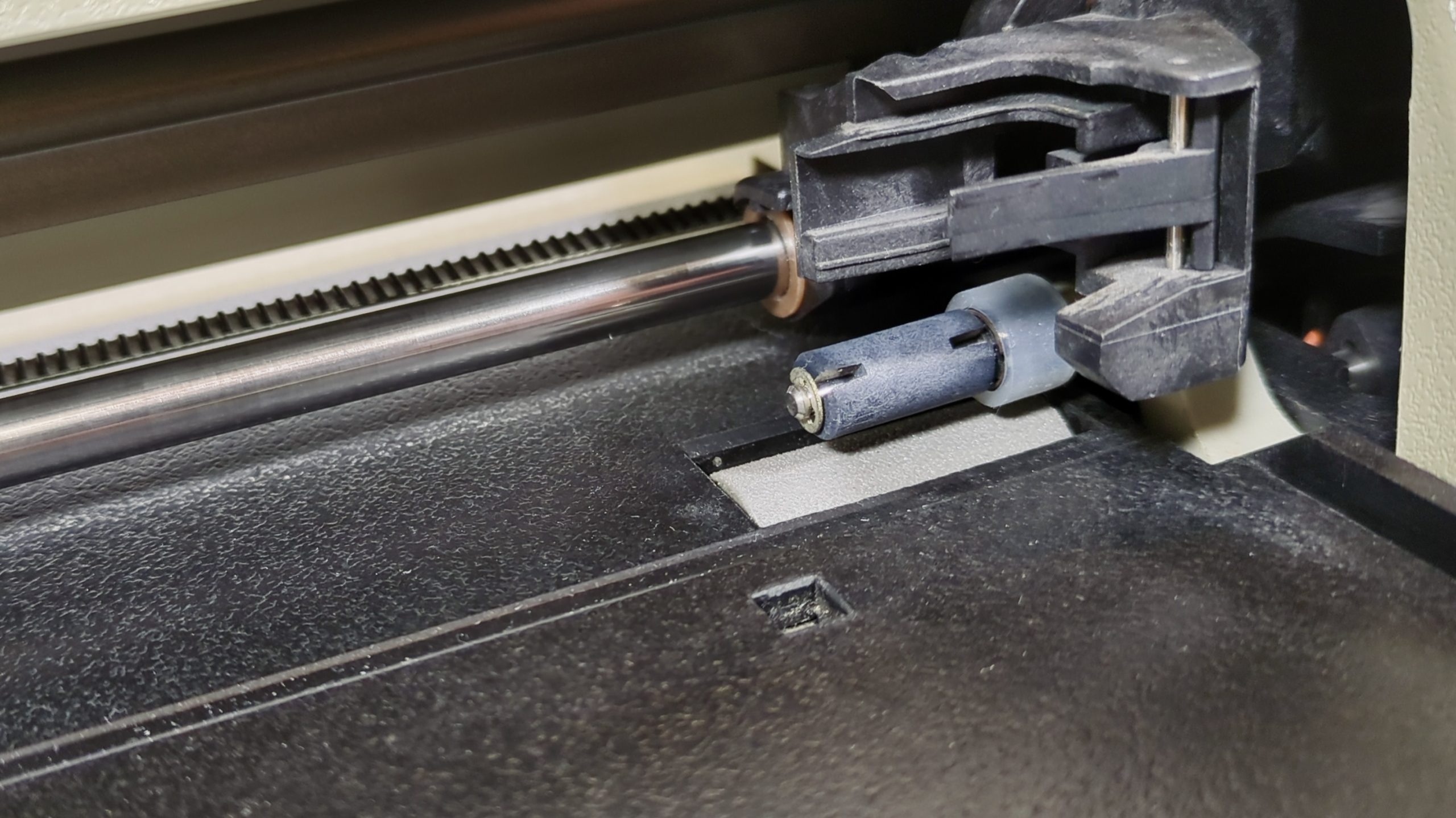
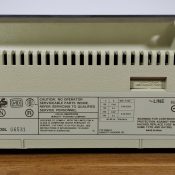
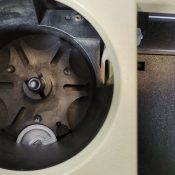
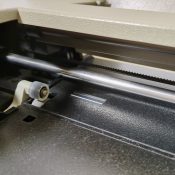
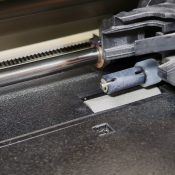
This particular unit served for years with the Dutch PTT (the national post and telecommunications company), and has been serviced — with new pinch wheel rubbers and a new Geneva wheel installed. That detail matters: the Geneva wheel that rotates the pen carousel is the classic weak point of the 7475A. When it fails, the carousel makes a ruckus and stops spinning; it's such a well-known failure that 3D-printed replacement wheels are widely available in the community. This machine's has already been renewed.

Read more below

€299 (Excl. Vat)

In stock

Description

Graphics Improves Communication

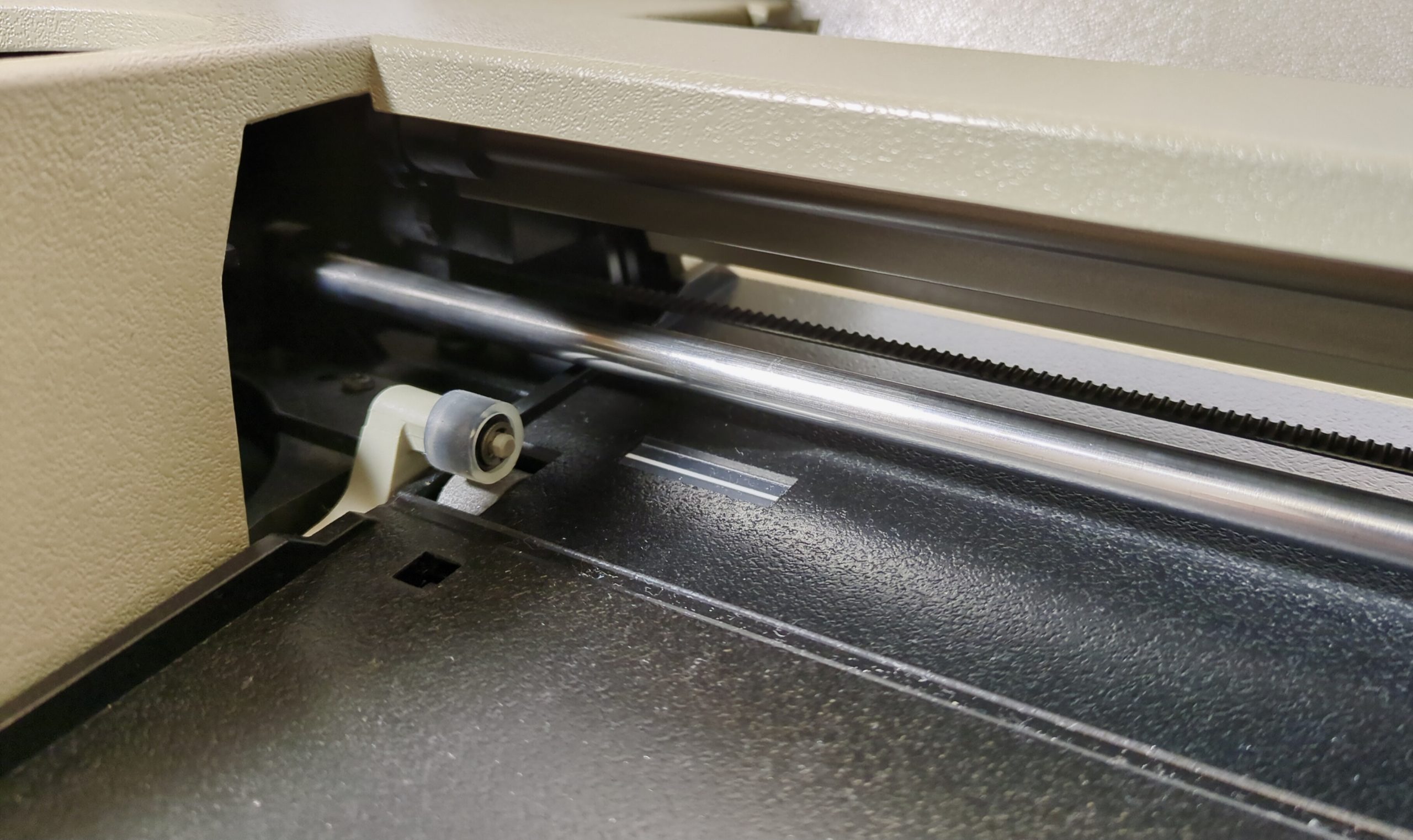
The 7475A plots on A (Letter/A4) and B (Tabloid/A3) media by extending one of the rollers inward — a clever trick that made it far more compact and lighter than flatbed machines, with much simpler mechanics: a single pen axis, and rollers that grip the paper and move it in the other direction.

Resolution is remarkably good, provided you have good pens and paper with low bleed — original HP plotter paper works best, and the matte back of modern photo paper is a good alternative. The plotter is fast with geometric line work; densely filled areas naturally take longer, because that’s real ink, applied by a real pen.

What It Does

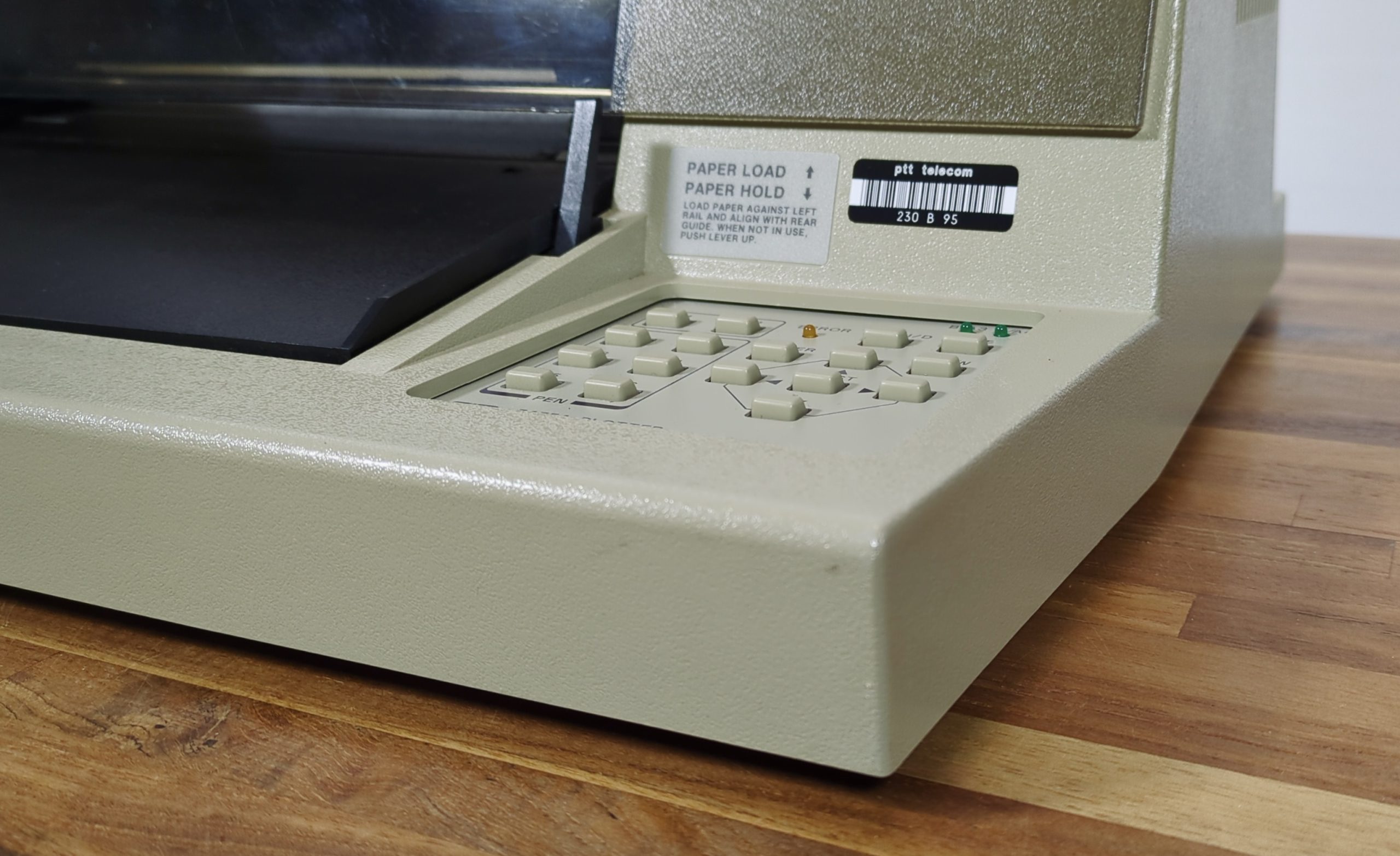
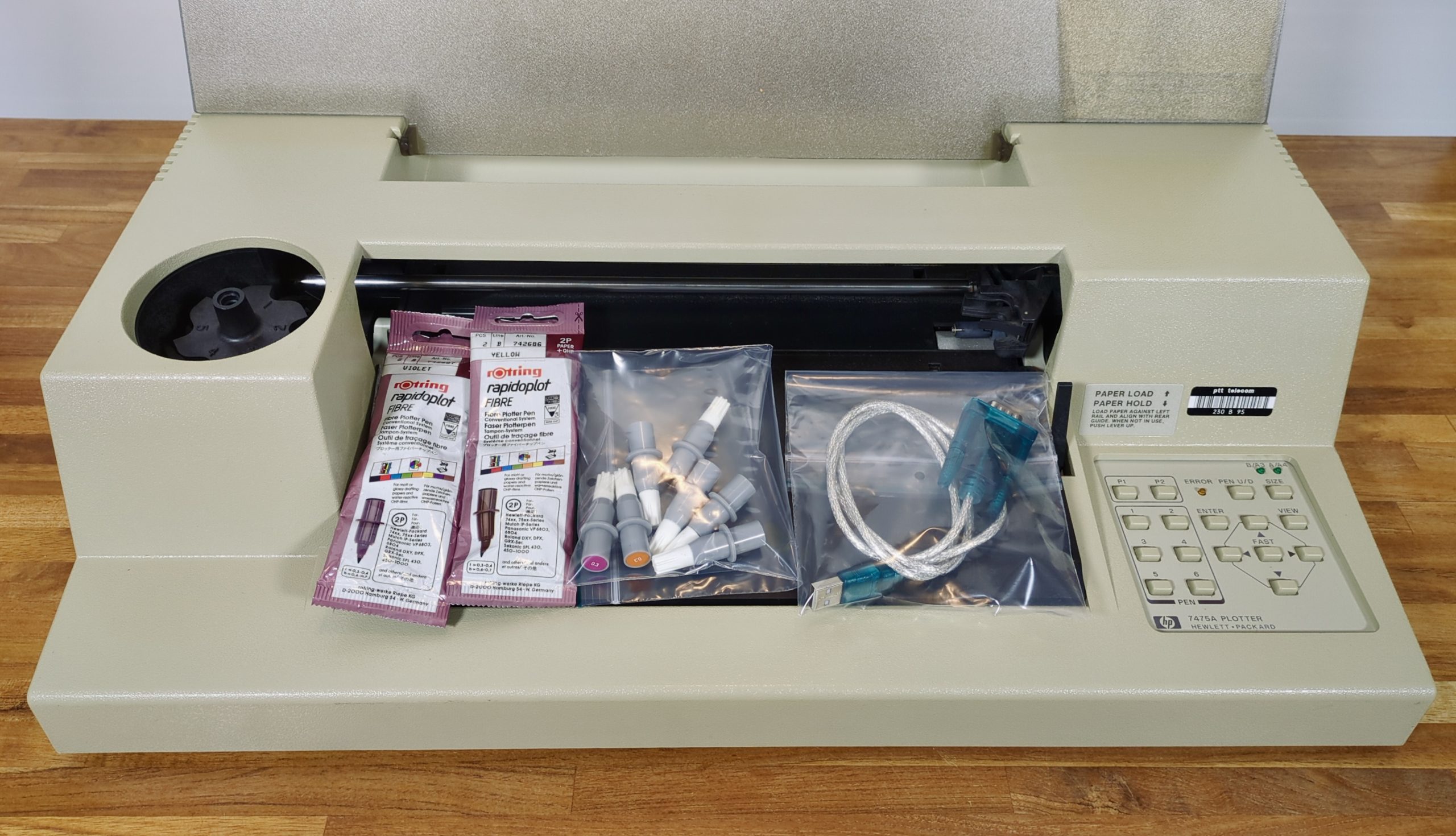
  • 6-pen plotting with automatic pen changing via the carousel
  • A/B size media — Letter/A4 up to Tabloid/A3 (11×17)
  • HP-GL — the industry-standard plotter language, easy to generate from Inkscape and vpype
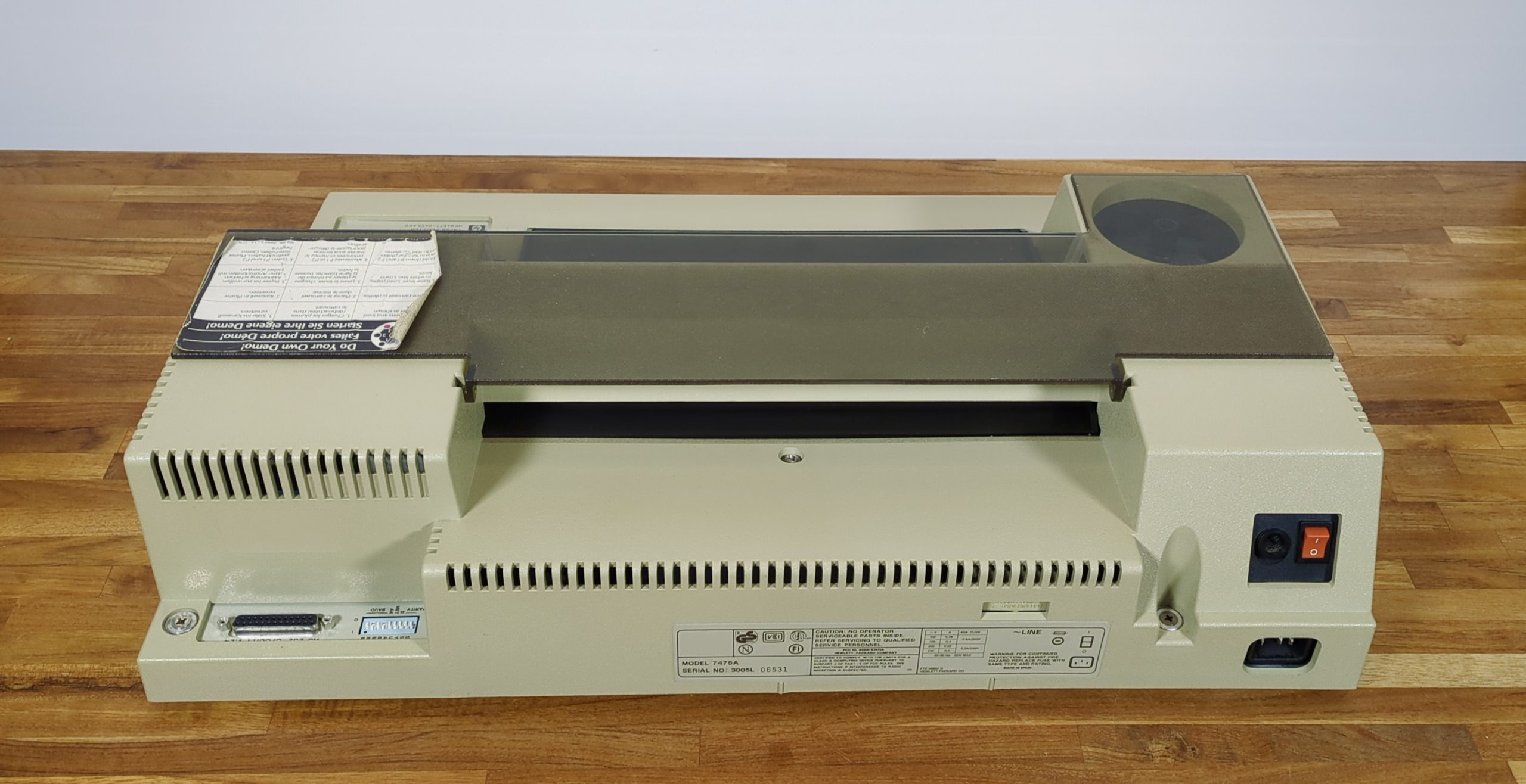
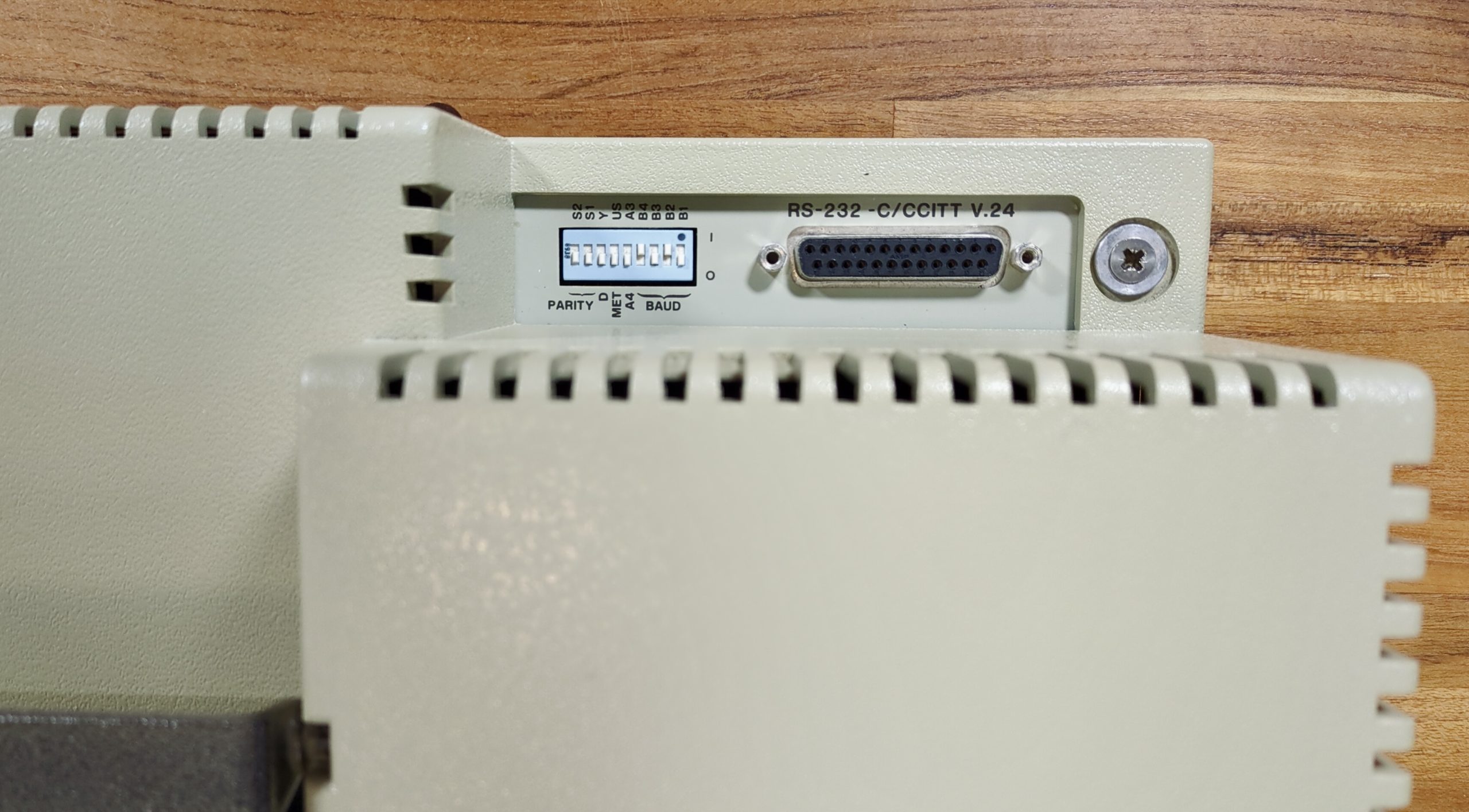
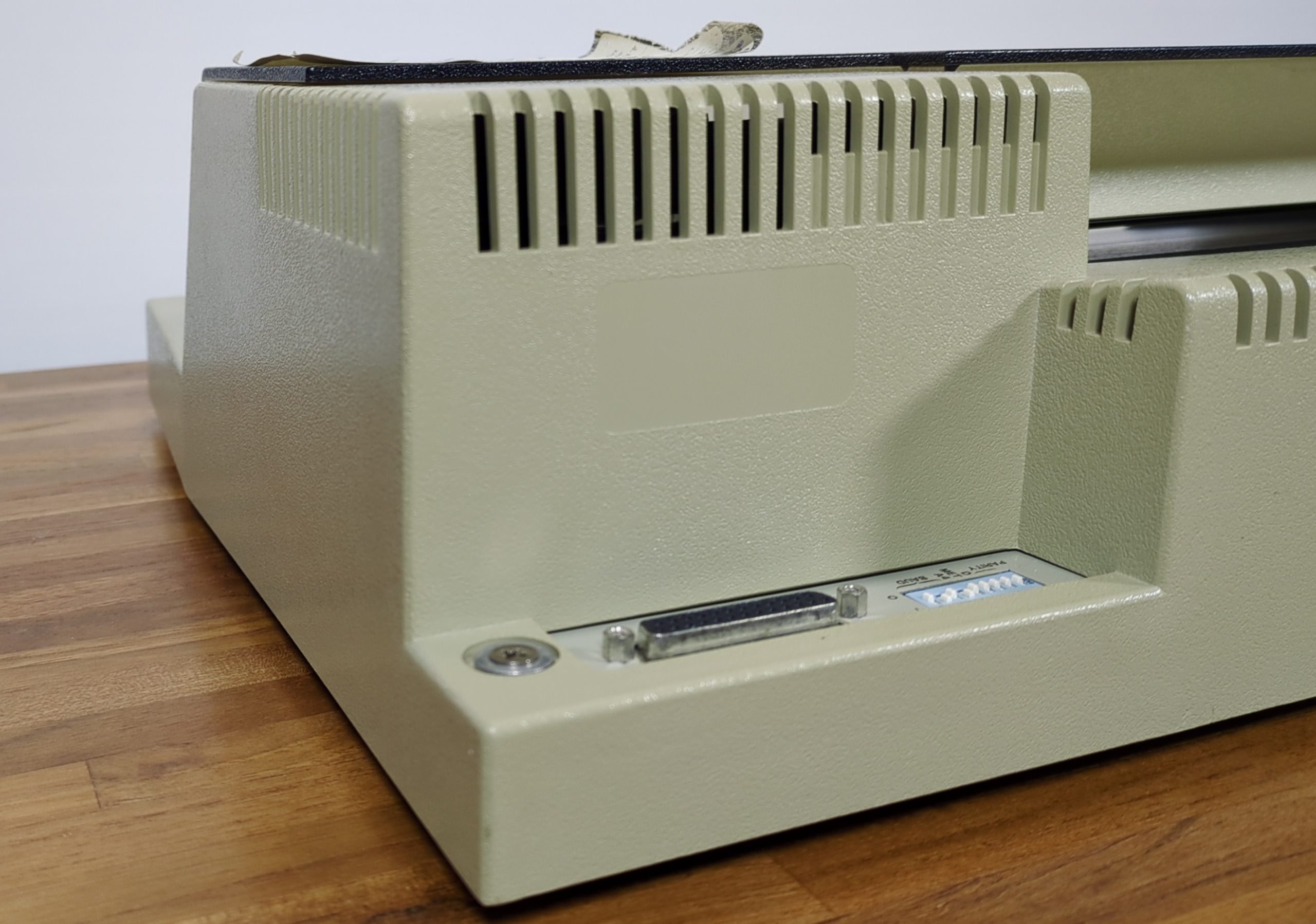
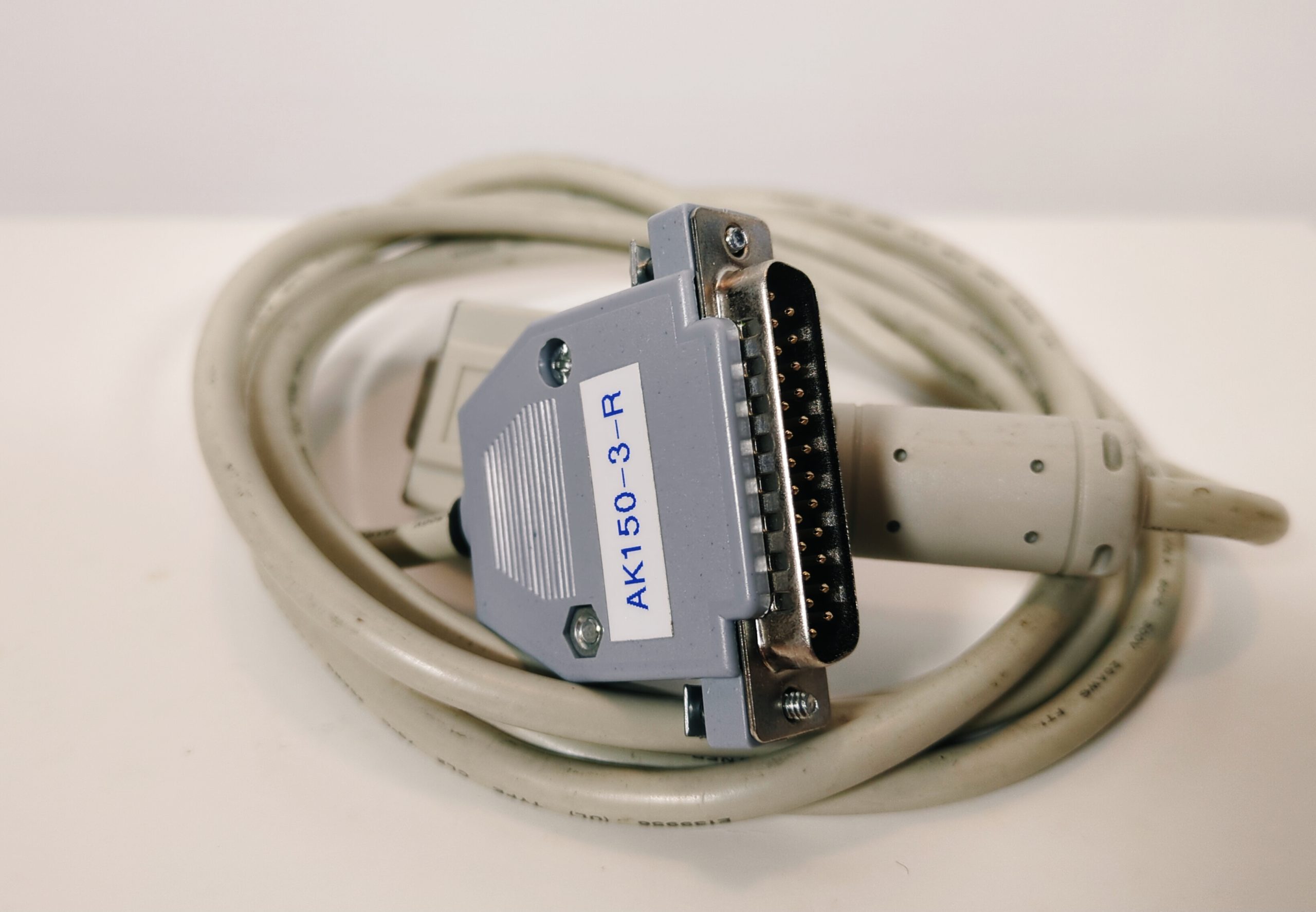
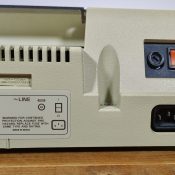
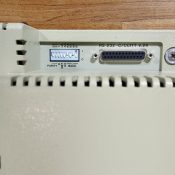
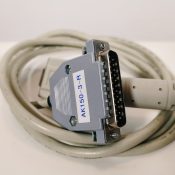
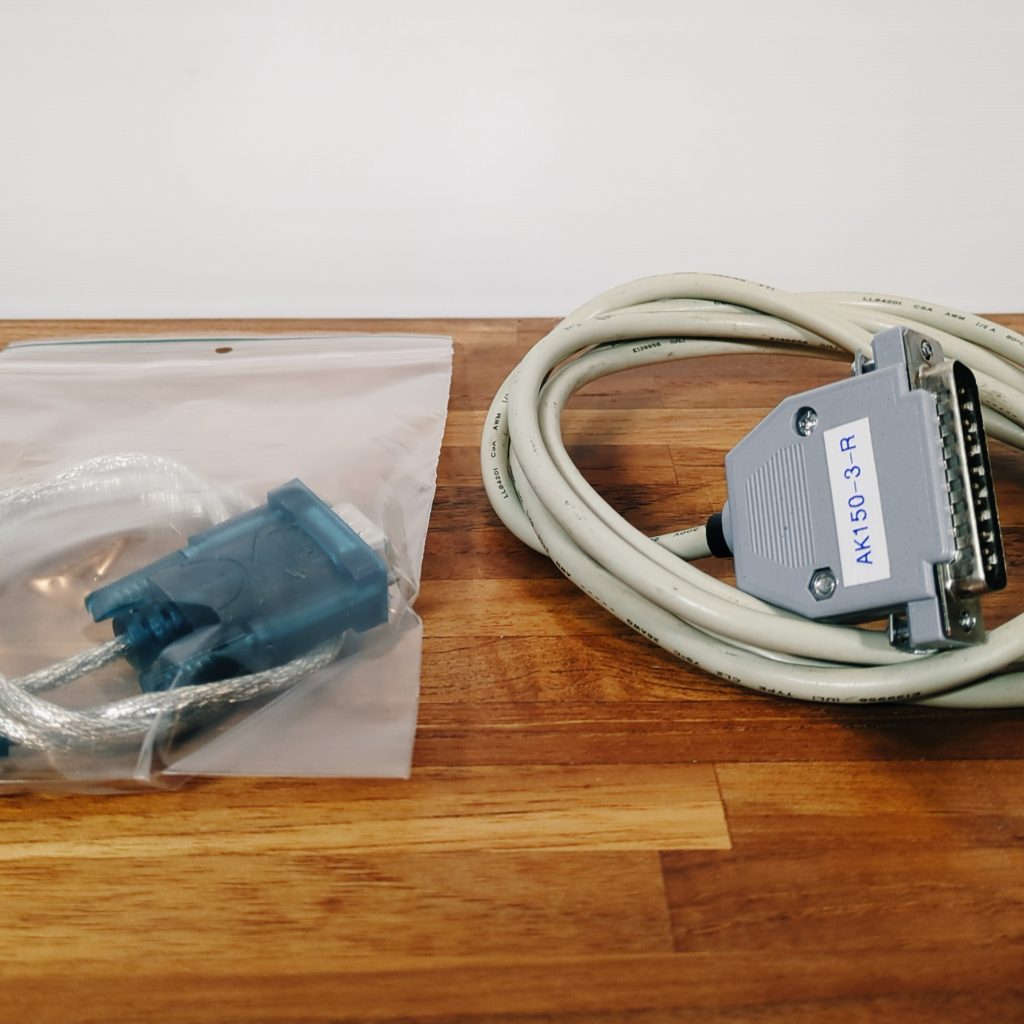
  • Serial (RS-232-C) — works with the AK-150 config cable (sold seperately)
  • Compact footprint — the sweet spot between the smaller 7470/7440 and the fast but positively huge 7550
  • 1 carousel included — up to six pens of any combination
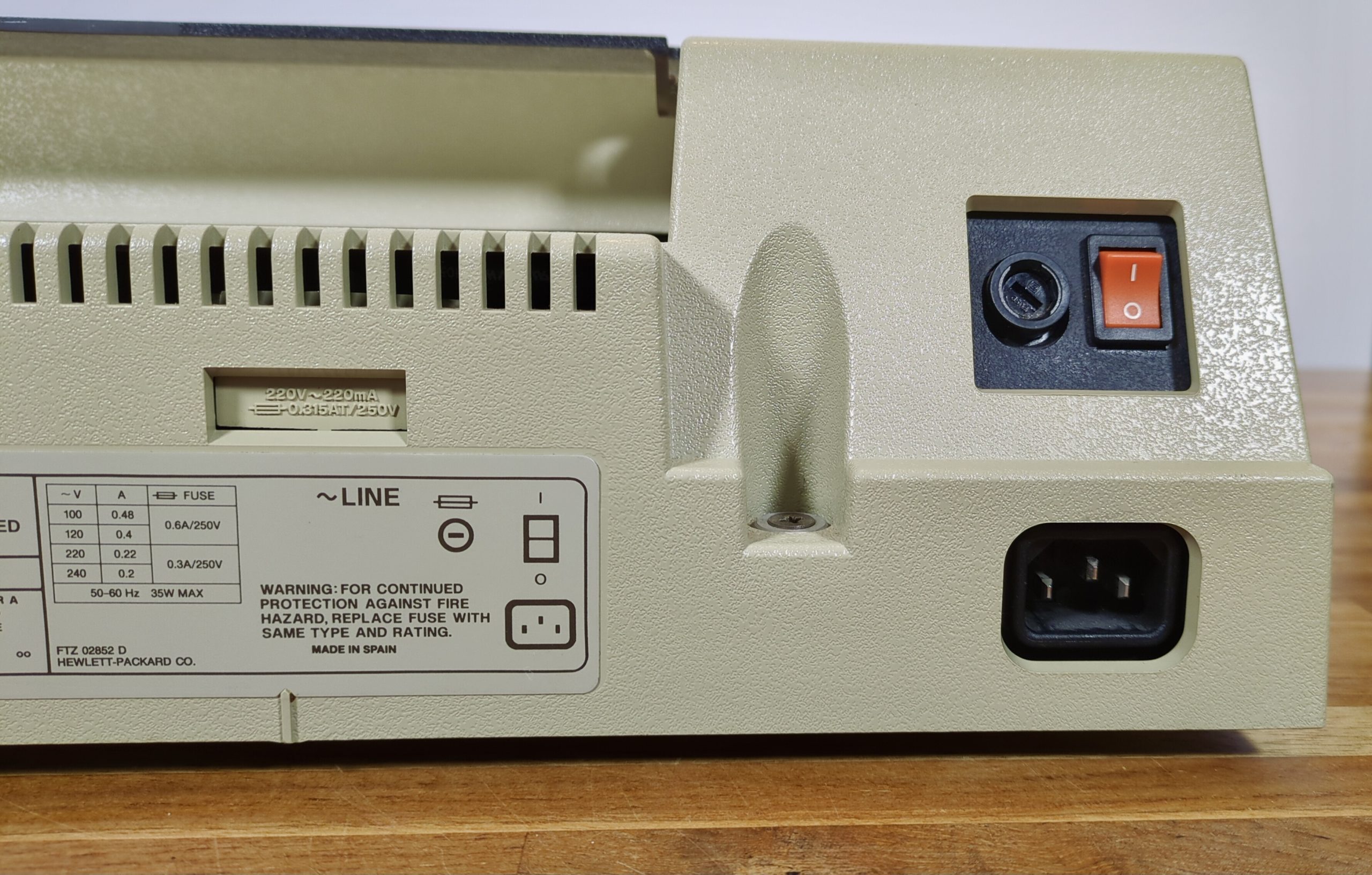
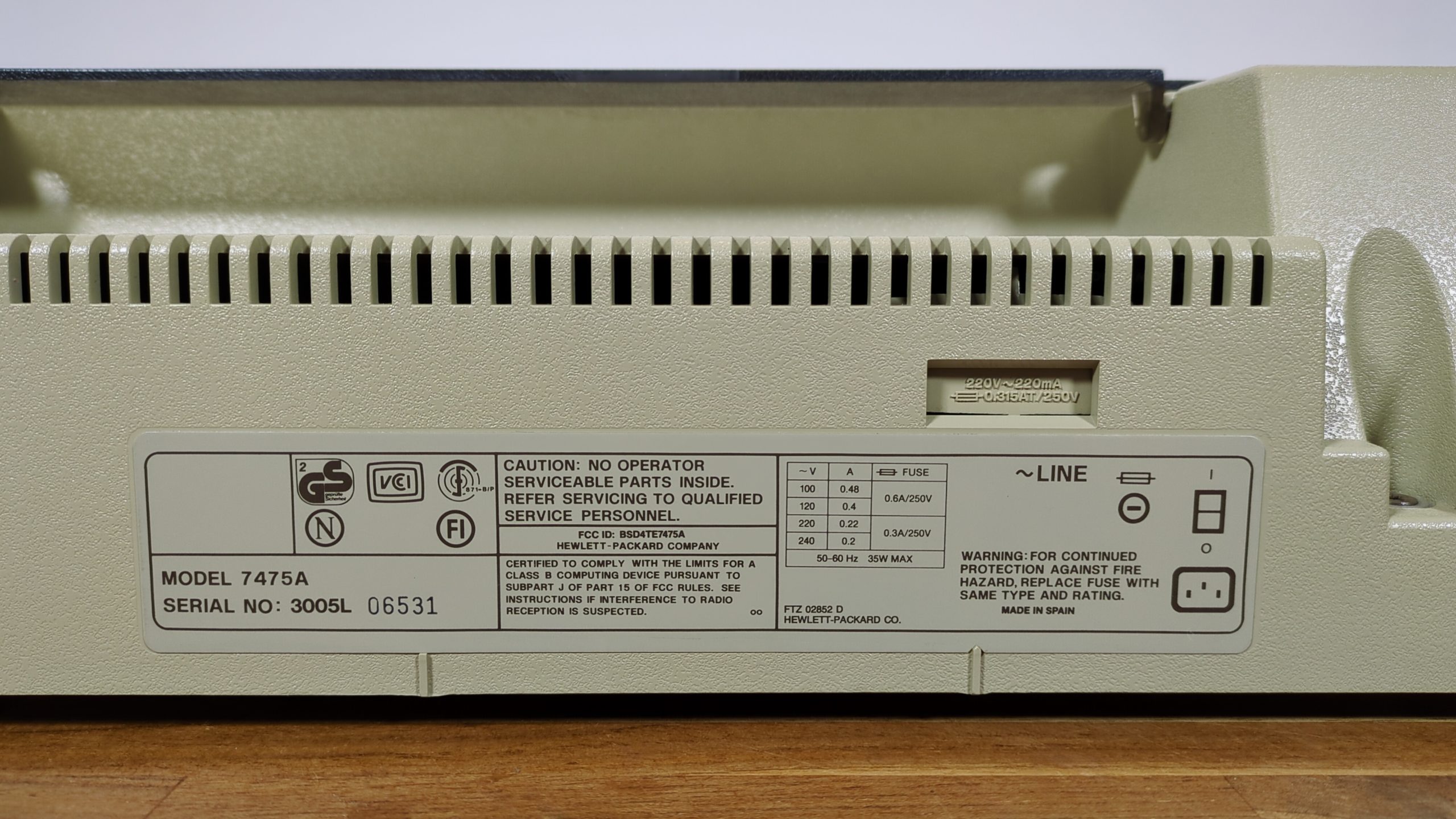
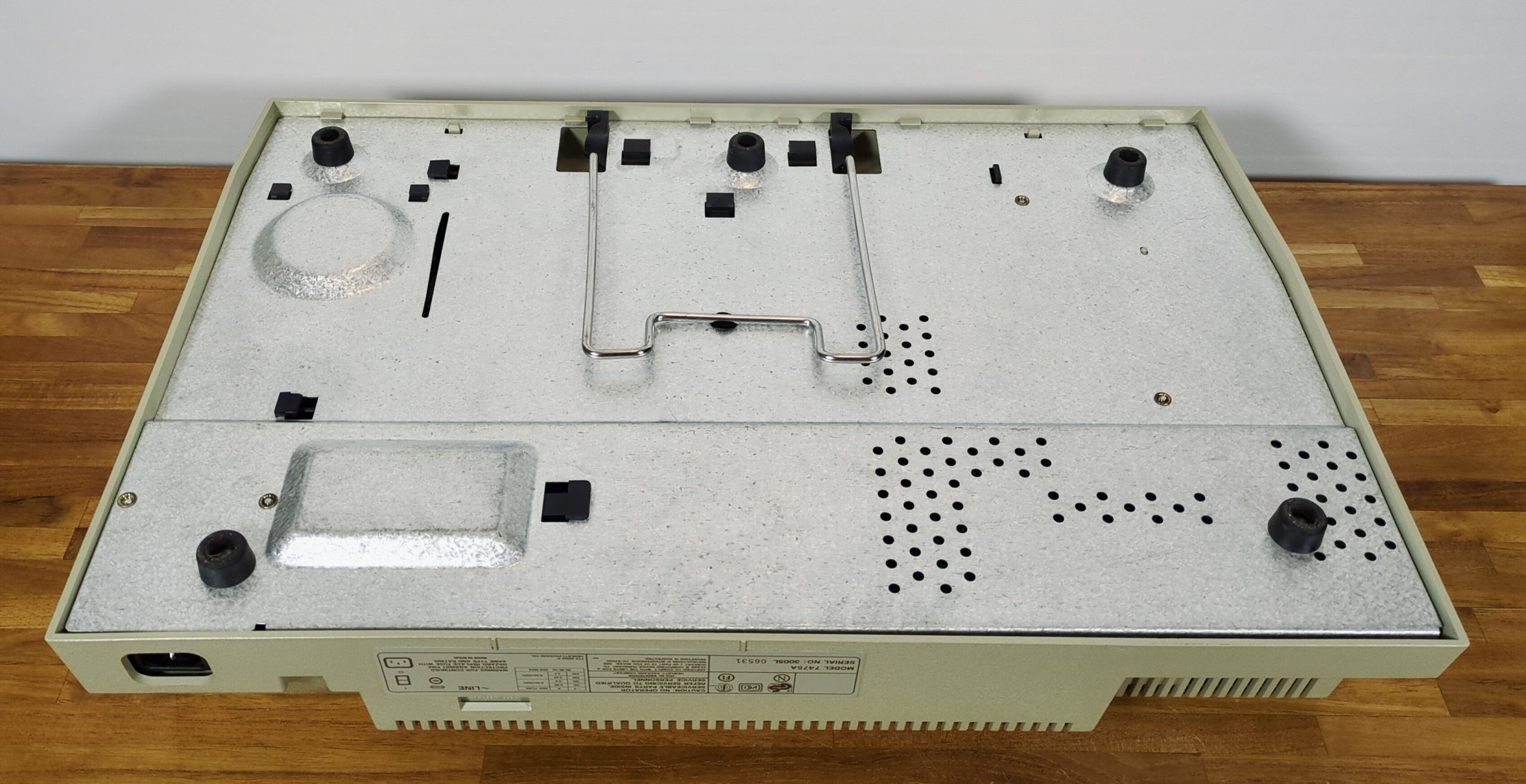
  • Power Switchable to 100, 120, 220, 240V (ranging 50-60Hz), machine is setup for 220V and comes with corresponding IEC cable

Check out more specs at out dedicated plotter page for this HP7475A.

Condition & Provenance

  • Served many years at the Dutch PTT
  • Serviced, with a new Geneva wheel — the carousel rotates reliably, replacing the part most prone to wear
  • Serviced, with new pinch wheel rubbers — the old rubber was vaporized
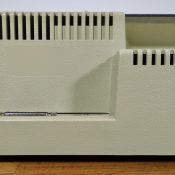
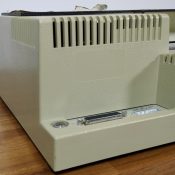
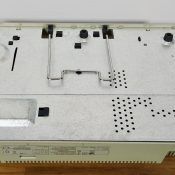
  • Further in good working order and very nice cosmetic condition
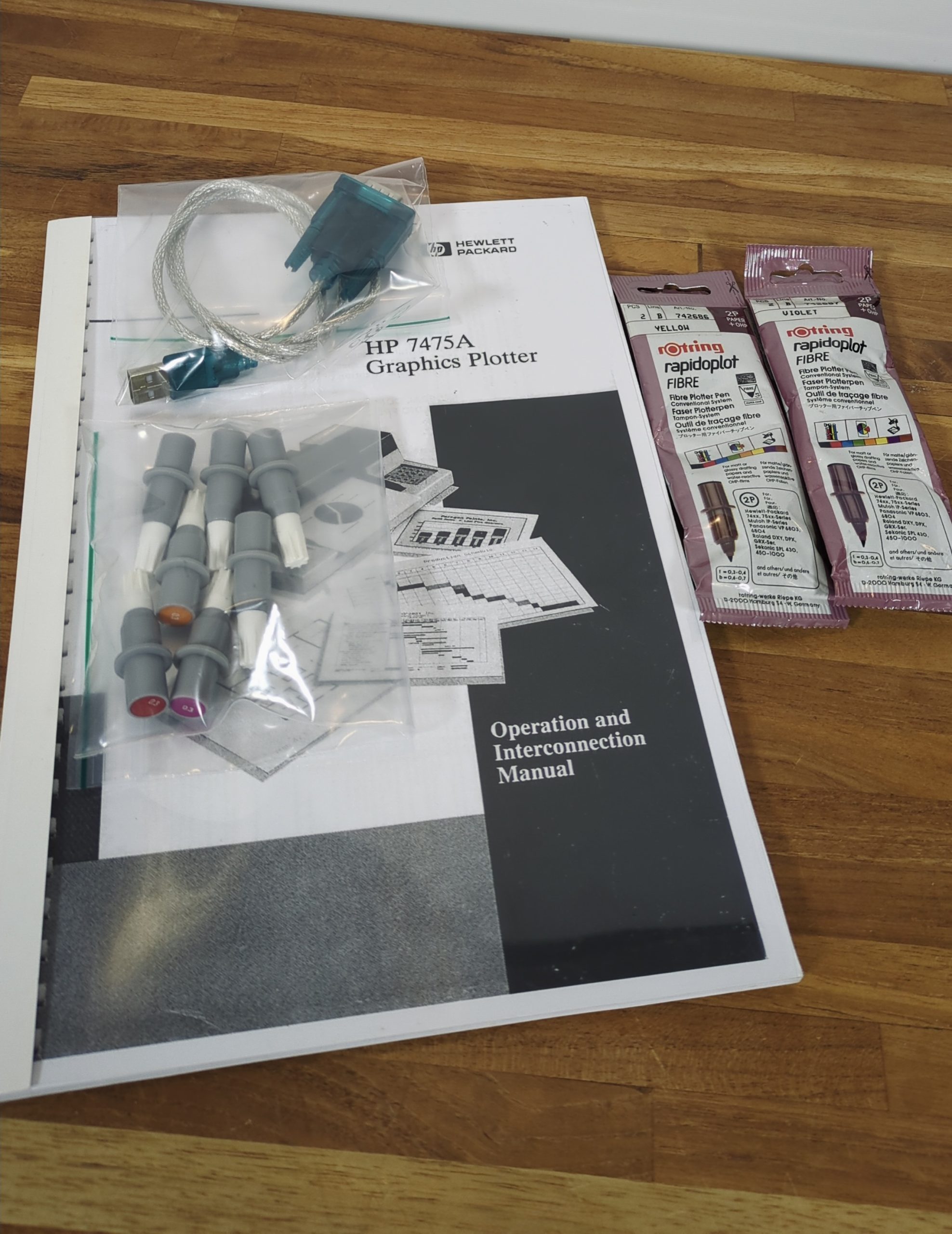
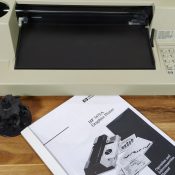
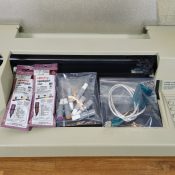
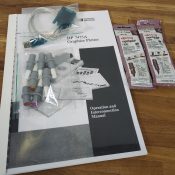
  • Bonus: a printed manual and a set of vintage pens (no guarantee on ink condition — they may have dried out; reviving old pens is a known and doable exercise) and a serial adapter
  • Bonus: Serial starter kit: a serial cable in the Assmann AK-150 configuration, with an USB serial adapter. Plug-and-play (with the correct software setup).

Why This One?

The 7475A is widely regarded as the ideal first vintage plotter: affordable, supported by modern HP-GL tools, six colors, and simple robust serial interfacing from any computer. This is a dependable artist’s machine rather than a dusty shelf ornament — a natural companion to its bigger sibling, the 7550.

Please contact us for more info on this product.


Vintage electronics are sold tested, serviced and working, as-is.

We prefer local pick-up, but if not possible, we will ship insured only. Machine weight is 7 kg, appropriate packing materials will therefore be selected. Shipping weight is approximately 12kg.
Reviews

There are no reviews yet.

Be the first to review “Hewlett Packard HP 7475A Graphics Plotter — For Sale”

Your email address will not be published. Required fields are marked *


Related Products

FAQ

Pen plotting technology is a unique printing method that employs a mechanical arm to accurately draw designs on various media, such as big size paper or fabric. This technology is often used for creating intricate and detailed artworks nowadays, where in the nineties it was mostly used in PCB and electronic schematic design and Architectural/CAD design businesses.

A pen plotter is a specialized computer controlled printing device that uses a pen to draw very precise, high-quality graphics on paper.

You can compare it to a modern 3D printer, but it uses the Z-axis only to lift the pen up from the paper. 

We have plotters where the paper is static on the bed and where the arm moves in X and Y direction. We also have plotters that pull the paper back and forth and where the arm only moves in one direction. 

There is also a kind that can freely travel, like the Pen Mouse. These are fun, but we don’t use this for serious business. 

Modern inktjet plotters are pretty fast, use ink cartridges and produce photo quality prints. They are all around us and some versions are even found in homes. We like the old vintage plotters, because they challenge us. They are not easy to operate, often break and require care and attention. Watching the pen slowly working to the endresult is above all very pleasing and satisfying to watch. 

We have a bunch of them in working and none working condition. We dedicated a page on them here. 

Vintage plotters are not easy to find secondhand anymore. We have bought some plotters that were stored in moist environments and needed lot’s of maintenance and repairs. The costs are often much higher than the profit. So not at the moment, but maybe some day when commercially feasable. 

For black and white, we use new old stock disposable or refillable Rapidoplot or Koh-i-Noor plotter pens. They are quite similar to Rotring technical drawing pens. 

For color we use various pens, felt tip, to ink pens, whatever fits the plotter. (speed, pressure, size)

Designing or creating code various depending on complexity. The plotting process itself can take anywhere between 30 minutes for small plots to even 5 hours for A1 plots. This is depending on pen travel distance, complexity and maximum usable drawing speed. 

Pen plots are expensive due to the specialized equipment, quality materials and expertise involved. The complexity and duration of the plotting process add to the cost. We provide a high-quality niche product that guarantees excellent results for our clients.

You will receive a product with a distinct and unique quality.

Pen plotting requires careful preparation. Both the pens and the media need to be set up properly. It’s important to do a few test plots before starting the actual one. After these steps, the main plot should go smoothly. Subsequent plots require less effort. After plotting, regular maintenance of the pens is important, as they can dry out quickly.

We ship large formats rolled. Small, less bendable products mostly flat. When appropriate we’ll use postbox sized packaging, to keep (shipping) costs down.

We ship to most countries from our HQ in The Netherlands. Except for some countries that are notorious for losing packages.

We use PostNL postal services with tracking and optional insurance. 

Contact us if you have special requests. 

That can be arranged. Contact us for possibilities. 

Contact us and we’ll figure something out.

We want your vintage pen plotter art to bring you joy. If it doesn’t quite fit, here’s how we handle returns and exchanges:

  • You have 14 days from delivery to notify us of a return or exchange request.
  • The Process:
    1. Contact us at hello@penplot.studio so we can resolve the issue.
    2. Condition: Items must be returned in original, undamaged condition (unframed, no folds/creases) and packed securely.

Damaged on Arrival? Contact us immediately with photos at hello@penplot.studio. We’ll replace your plot (only once per order) or issue a full refund, covering all shipping costs. 

Intrigued by our lines or ready to create something new? Let's plot it out together.

Mail us at hello @ penplot.studio or use the contact form.

Note: We’re not interested in ads, spam and other productivity undermining emails.