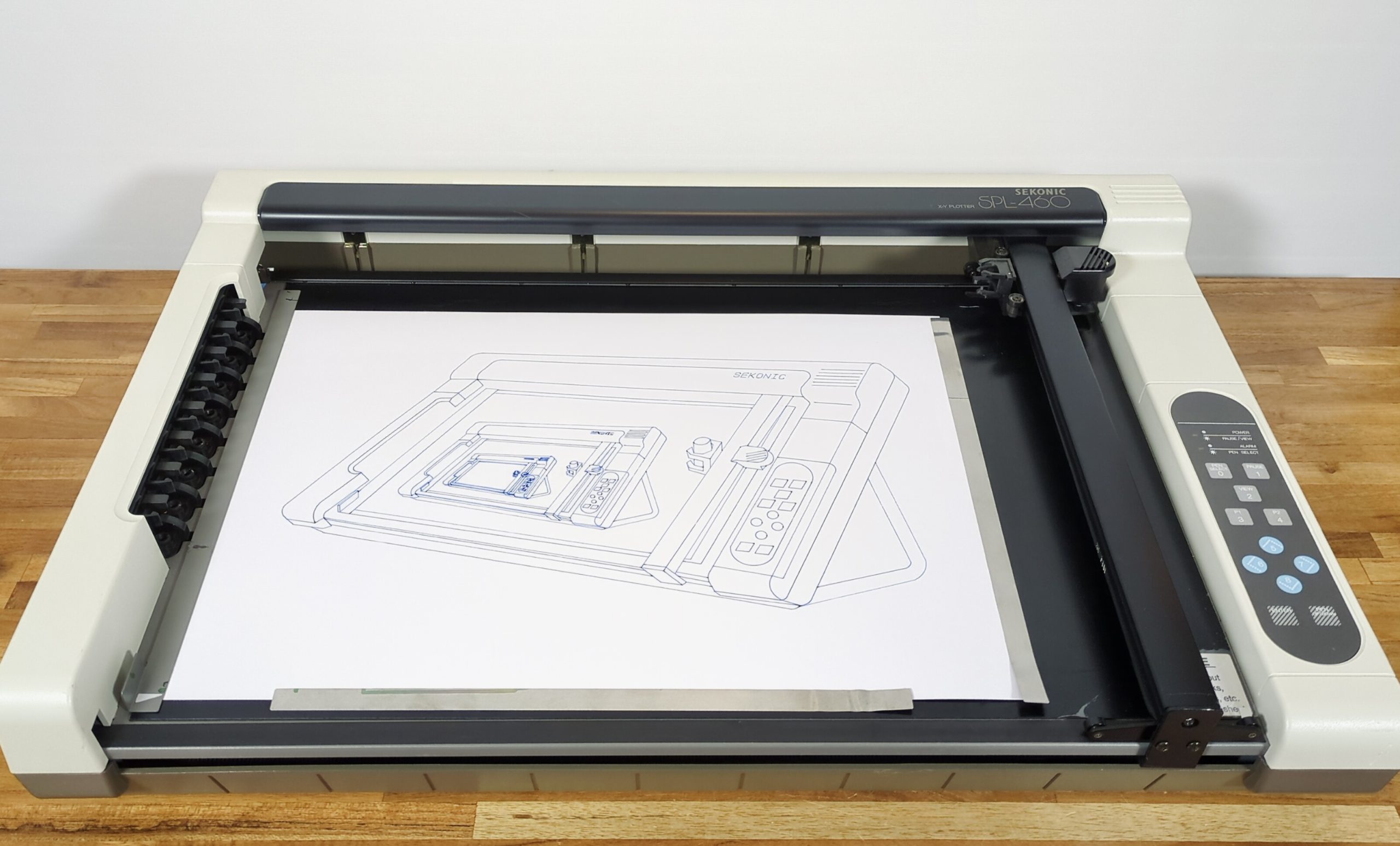
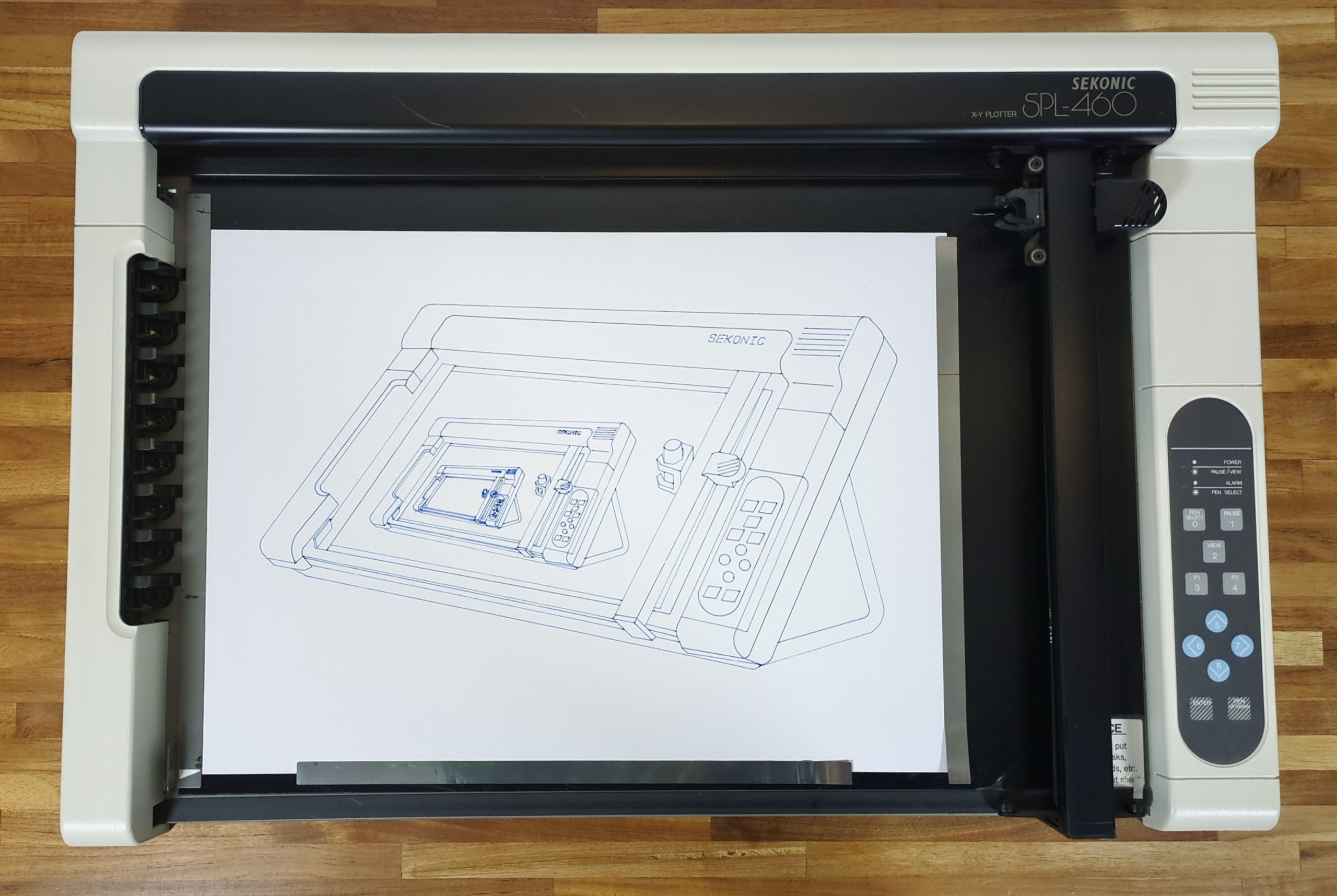
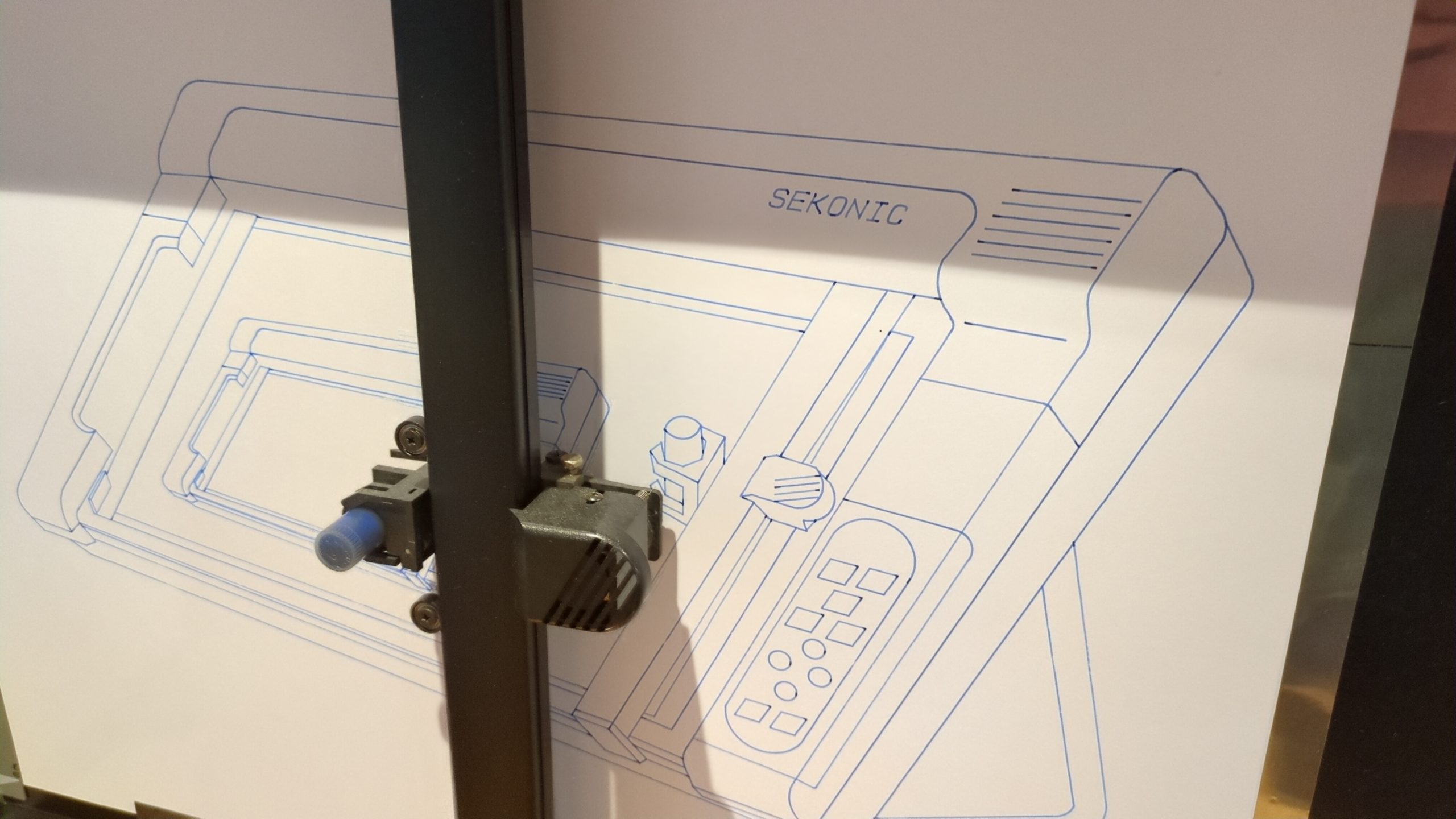
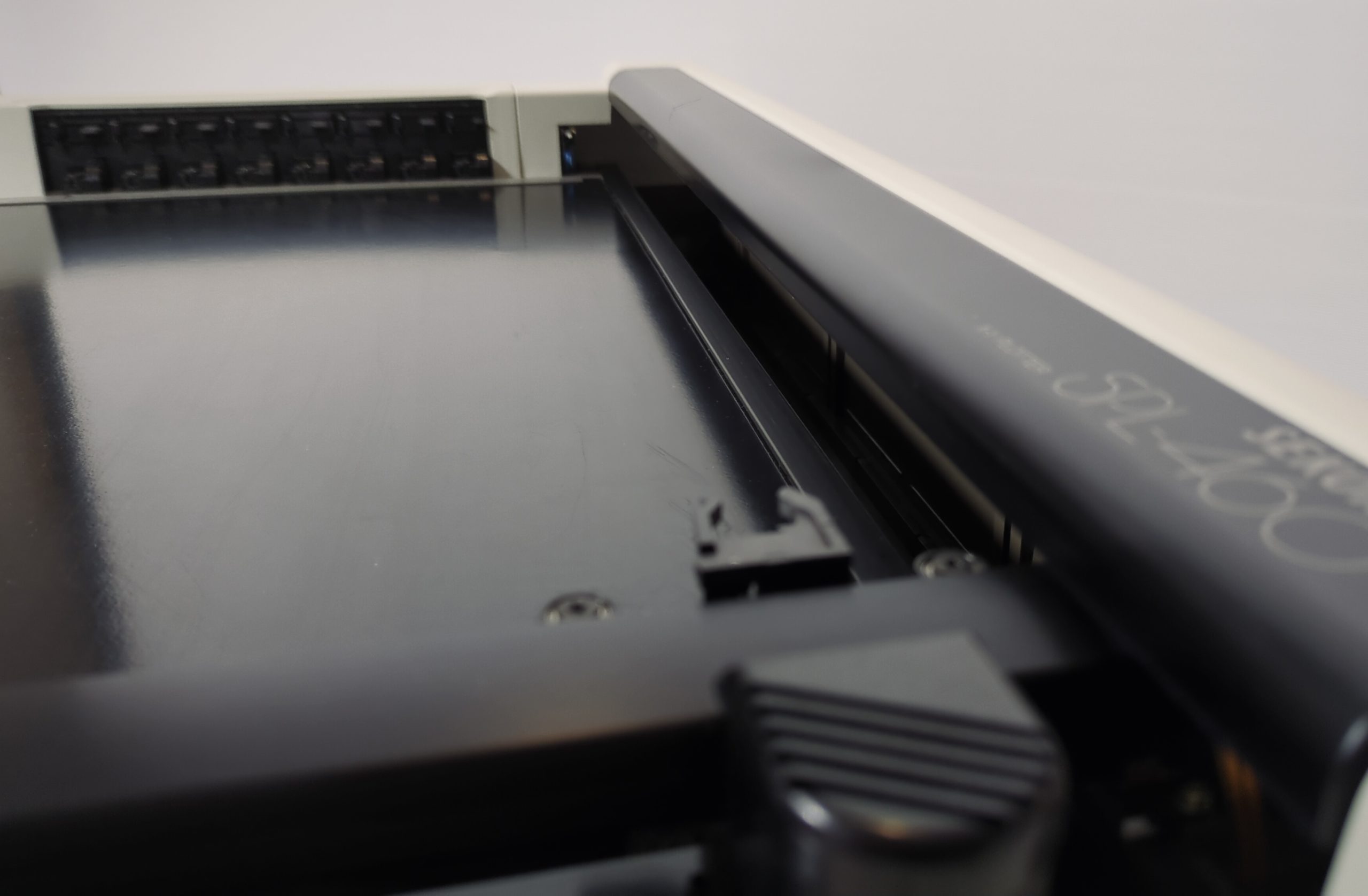
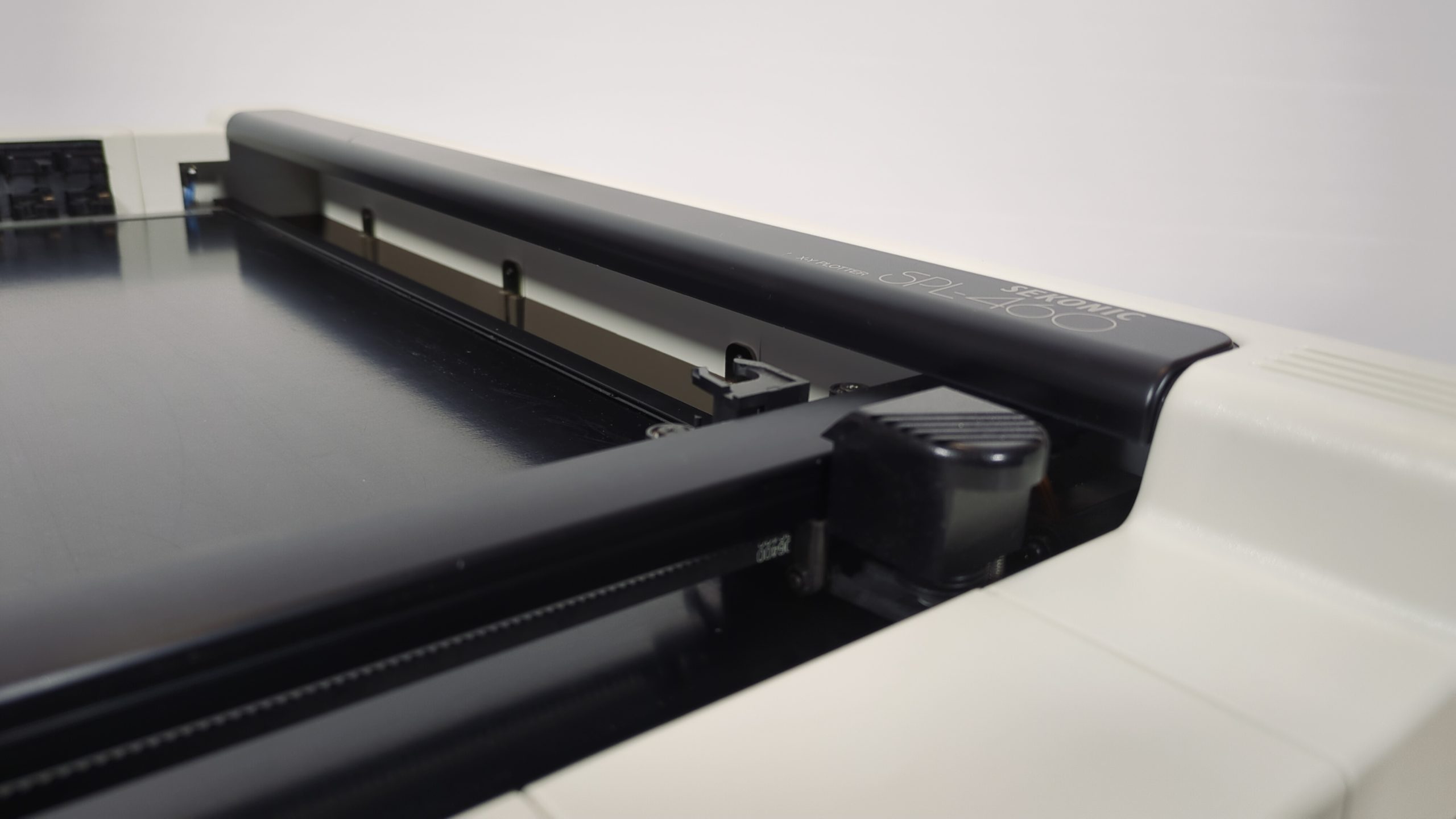
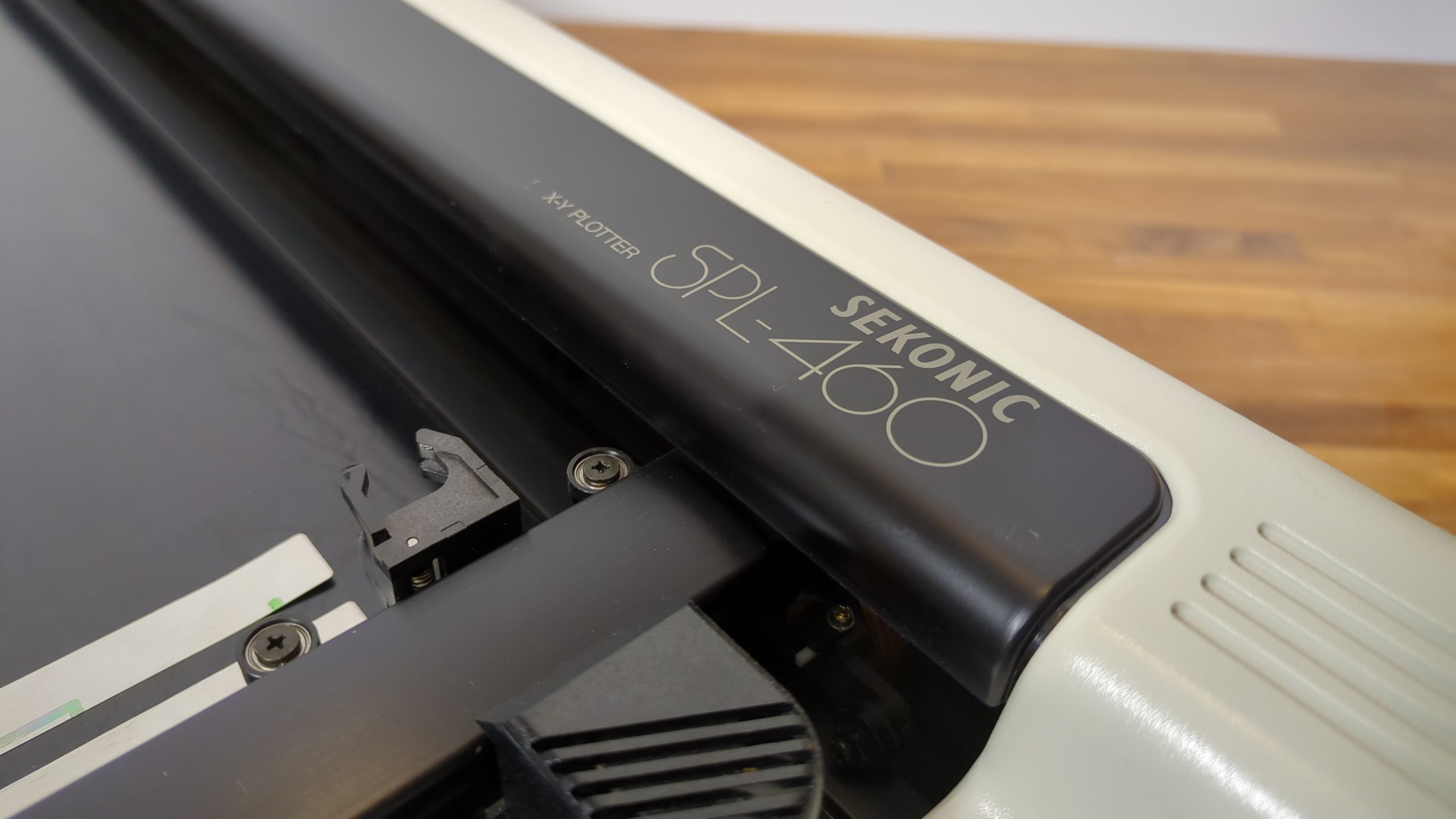
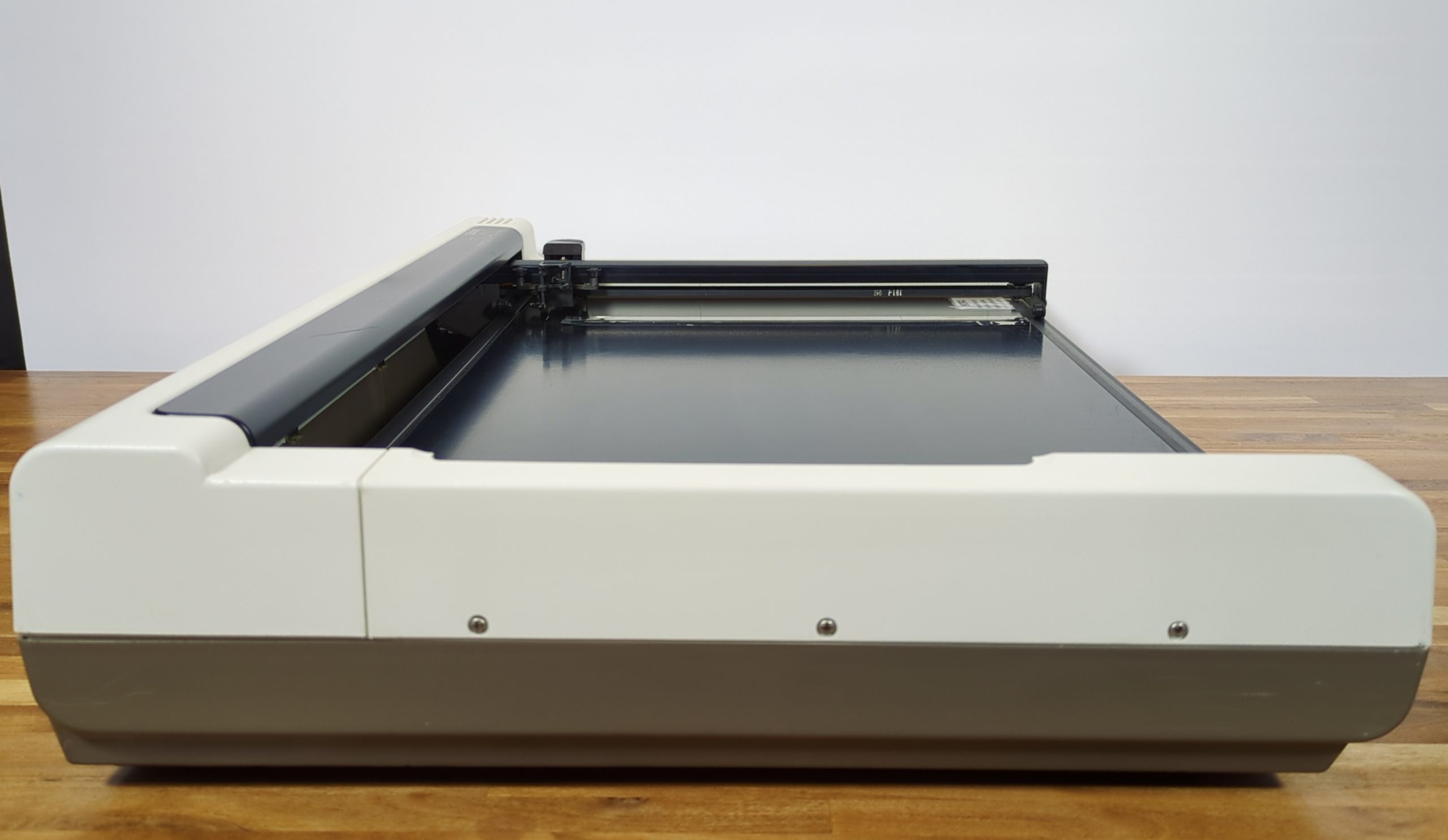
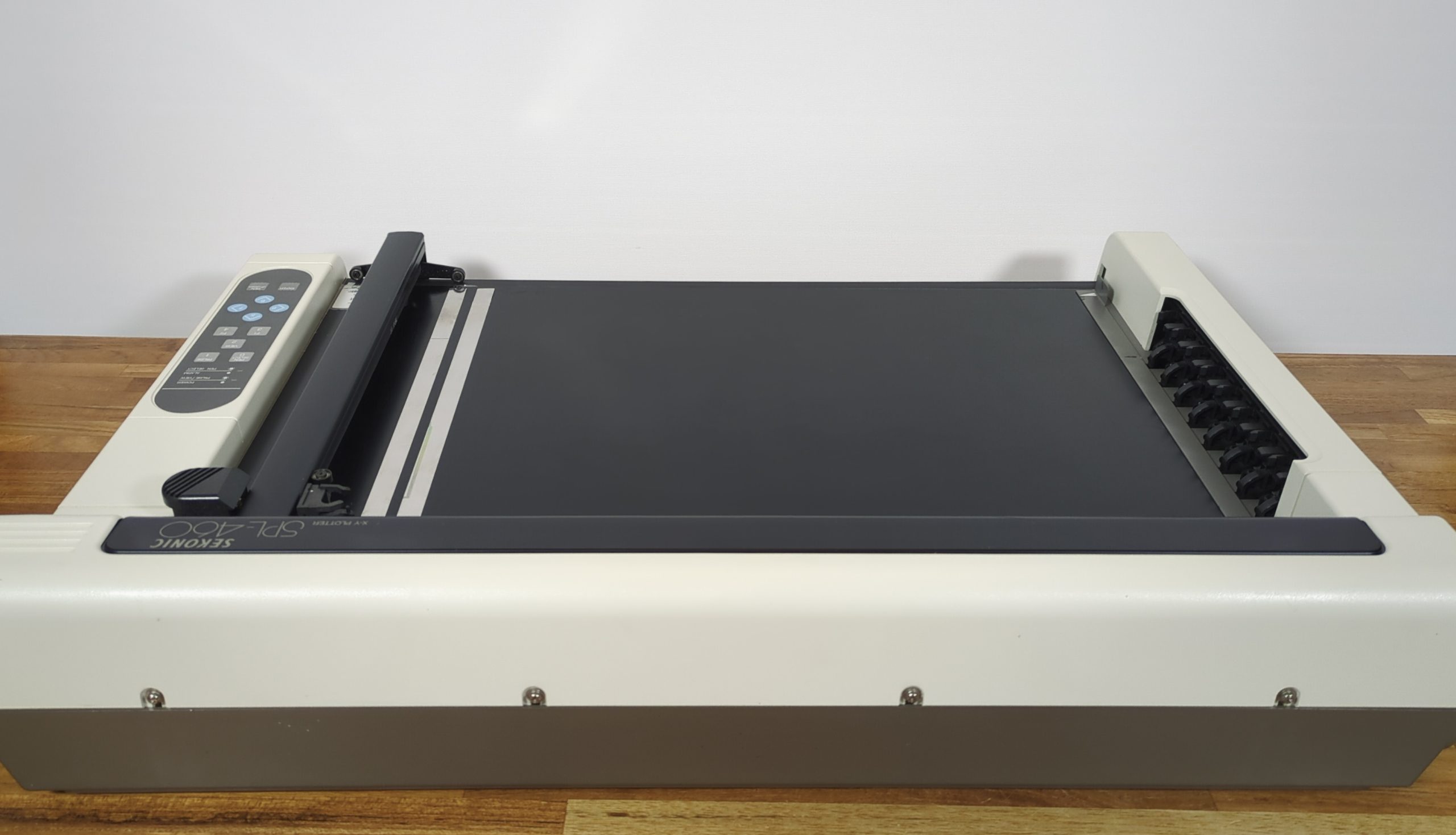
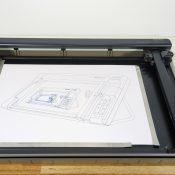
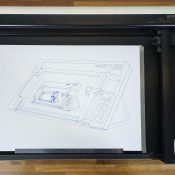
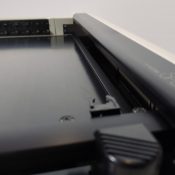
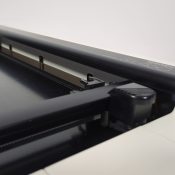
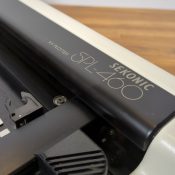
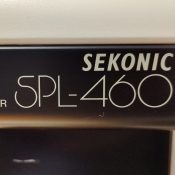
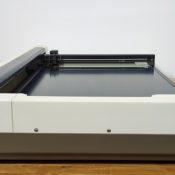
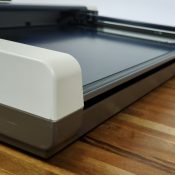
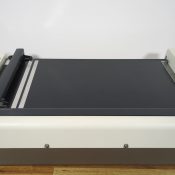
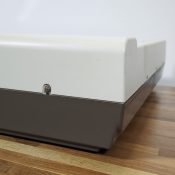
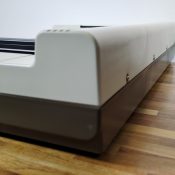
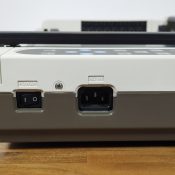
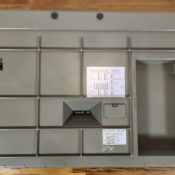
Sekonic SPL-460 pen plotter from 1993 plotting an Arthur Hoener inspired artwork with blue ink on white paper.

Sekonic SPL-460 X-Y Plotter – For Sale

The Rare One: An 8-Pen Japanese Flatbed, Early 1990s

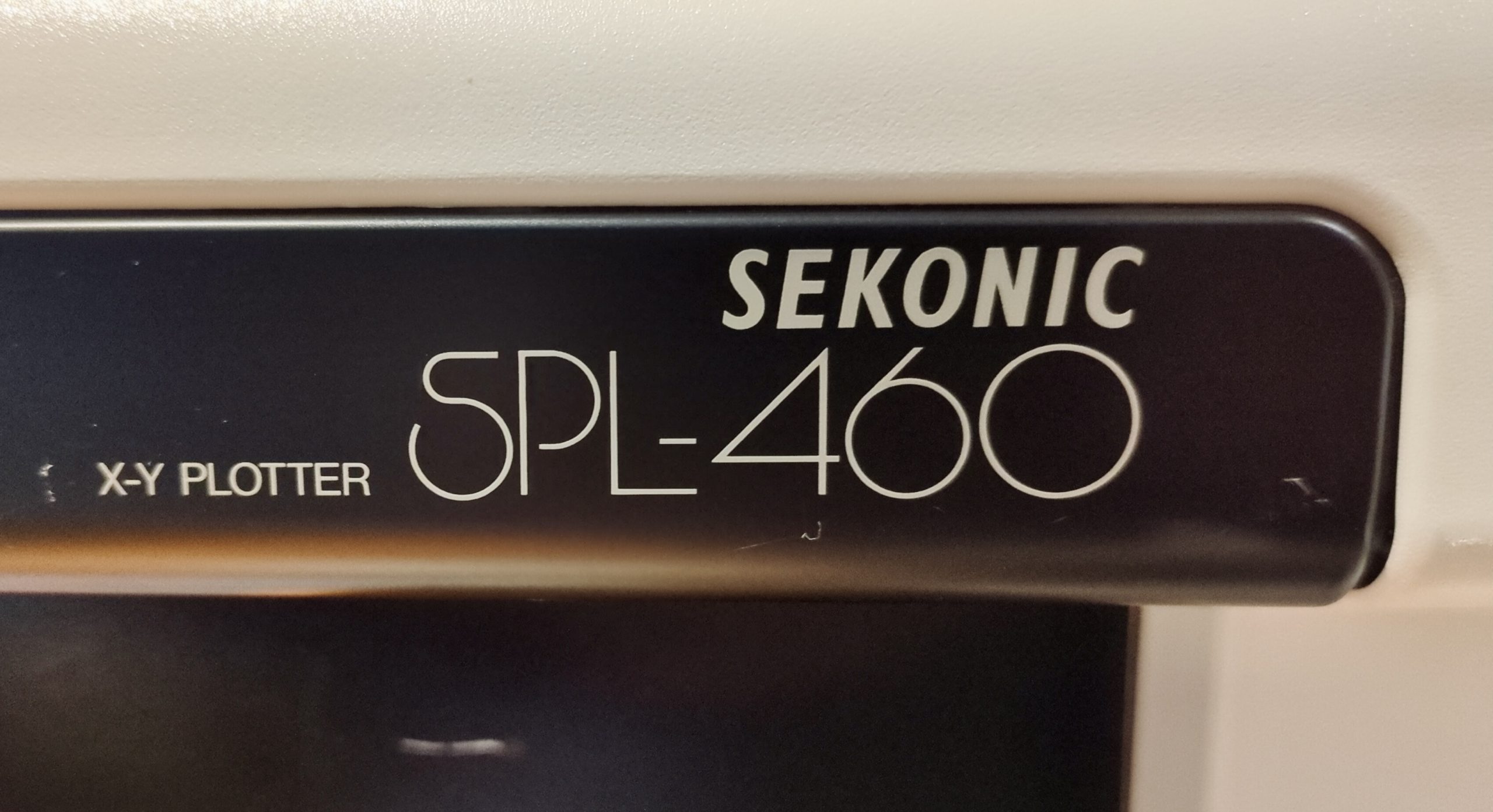
Some machines are famous because everyone owned them. The Sekonic SPL-460 is interesting because almost nobody did, probably. Built by Sekonic — the Tokyo precision-instrument maker founded in 1951, better known to photographers for its light meters — the SPL-460 is an 8-pen flatbed plotter from the early 1990s (build year 1991). Documentation on this model is scarce; surviving working units are rarer still. If you collect plotters, this is the machine that could fill the gap in your fleet.

And it earns its place. Where many flatbeds of its era shuffle along, the SPL-460 moves its carriage at up to 55 cm/sec — genuinely quick for a flatbed machine — and does so quietly.

Read more below

€350 (Excl. Vat)

In stock

Description

Eight Real Pens on a True Flatbed

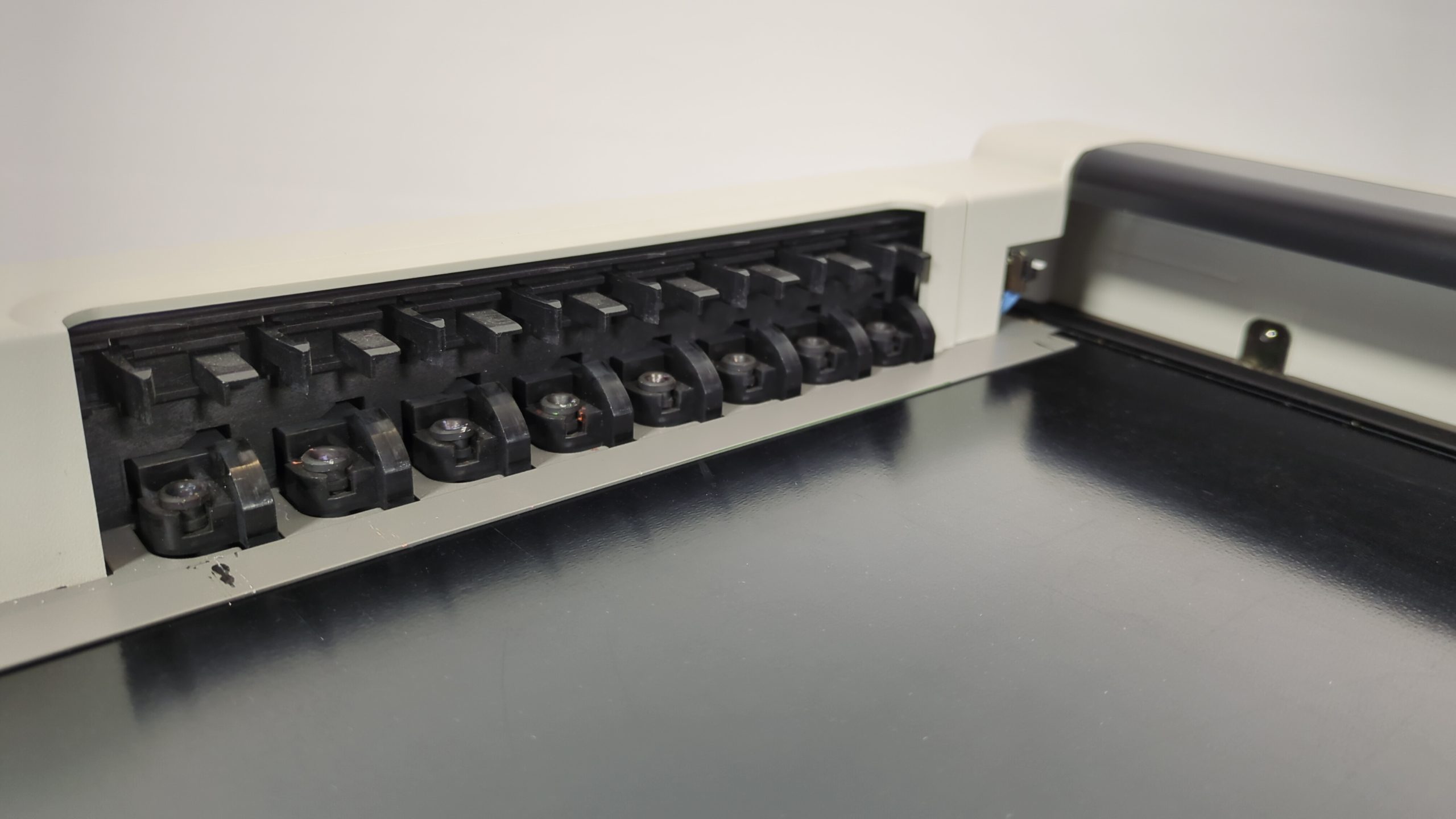
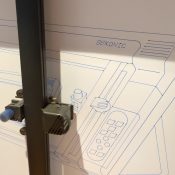
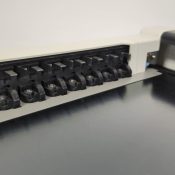
Eight pens means eight colors in a single run, with automatic pen changing — and flatbed mechanics mean the media sits still on the bed while the carriage does the work. That makes the SPL-460 forgiving with materials: heavier papers and sheet stock that a drum-fed plotter would struggle with are simply laid down and plotted.

The machine speaks HP-GL, the industry-standard plotter language, so it works out of the box with Inkscape and the whole modern ecosystem of HP-GL tools — connect it over its RS-232-C serial interface from any computer.

What It Does

  • 8-pen plotting with automatic pen changing
  • Max media size: A3 (297 × 420 mm)
  • Up to 55 cm/sec pen carriage speed — fast for a flatbed
  • Serial and parallel interface
  • HP-GL command language — plug into modern plotter software effortlessly
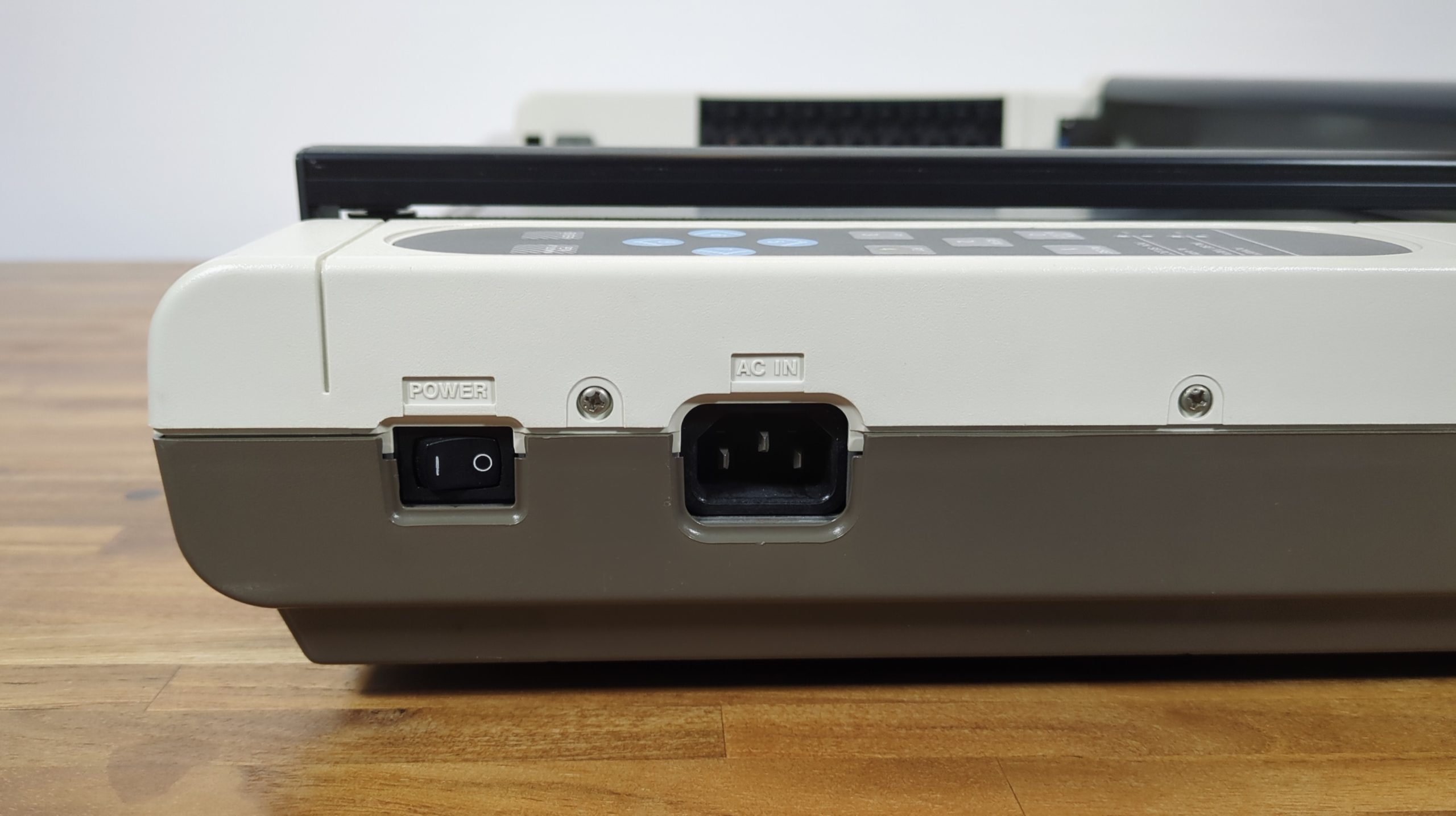
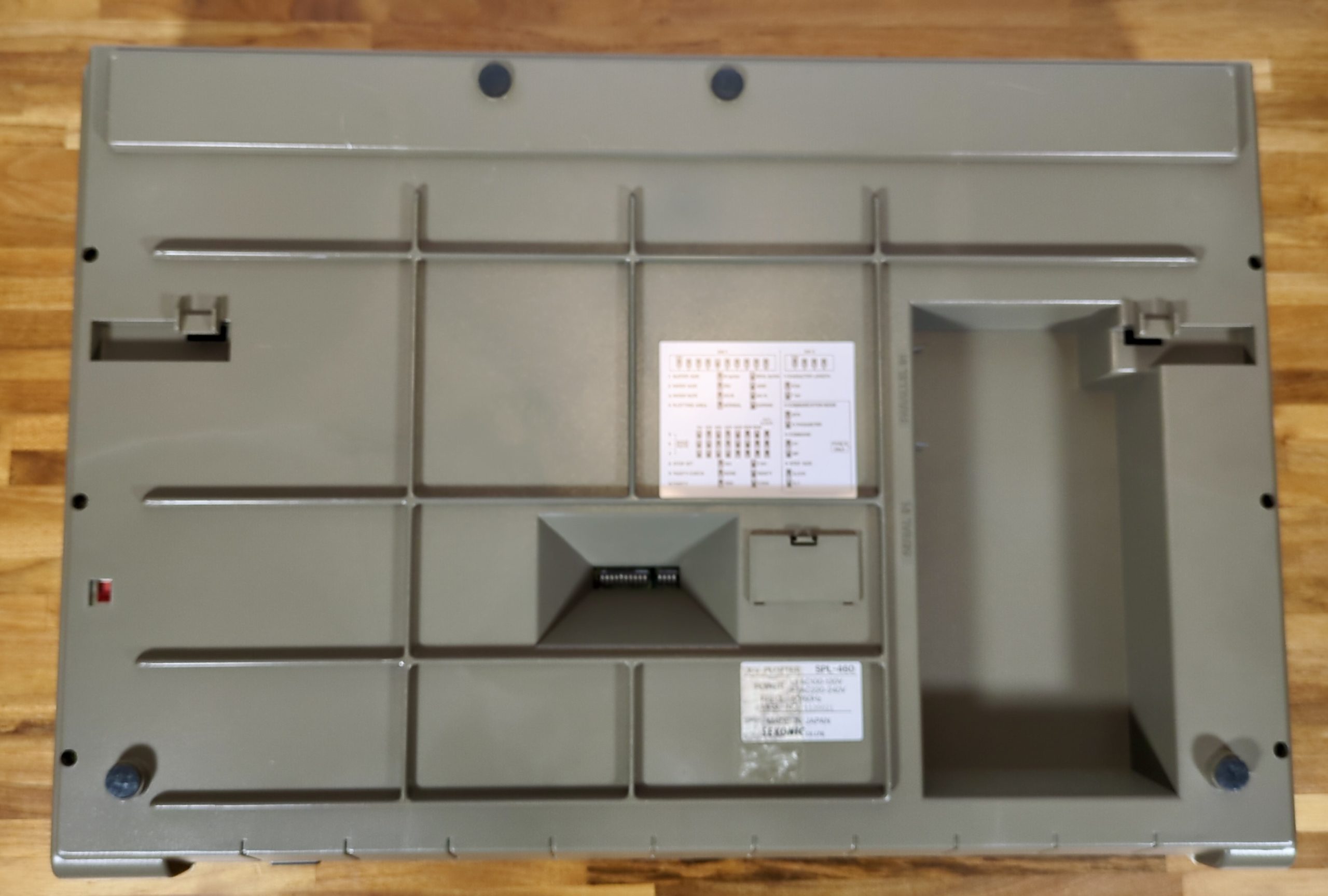
  • Power Switchable to 100, 120, 220, 240V (ranging 50-60Hz), machine is setup for 220V and comes with corresponding IEC cable

Check out more specs at out dedicated plotter page for this SPL-460. We use this exact model at the studio for prototyping designs and production plots too. It proved easy to capture video from as it’s pretty photogenic and makes nice sounds.

Provenance & Condition

This unit spent time as an exhibit in museum Museon in The Hague — a machine with a public and educational life. It has since been fully cleaned and serviced. Unlike many vintage machines, it needed no repairs: the service was precautionary. It plots reliably and is sold tested and working.

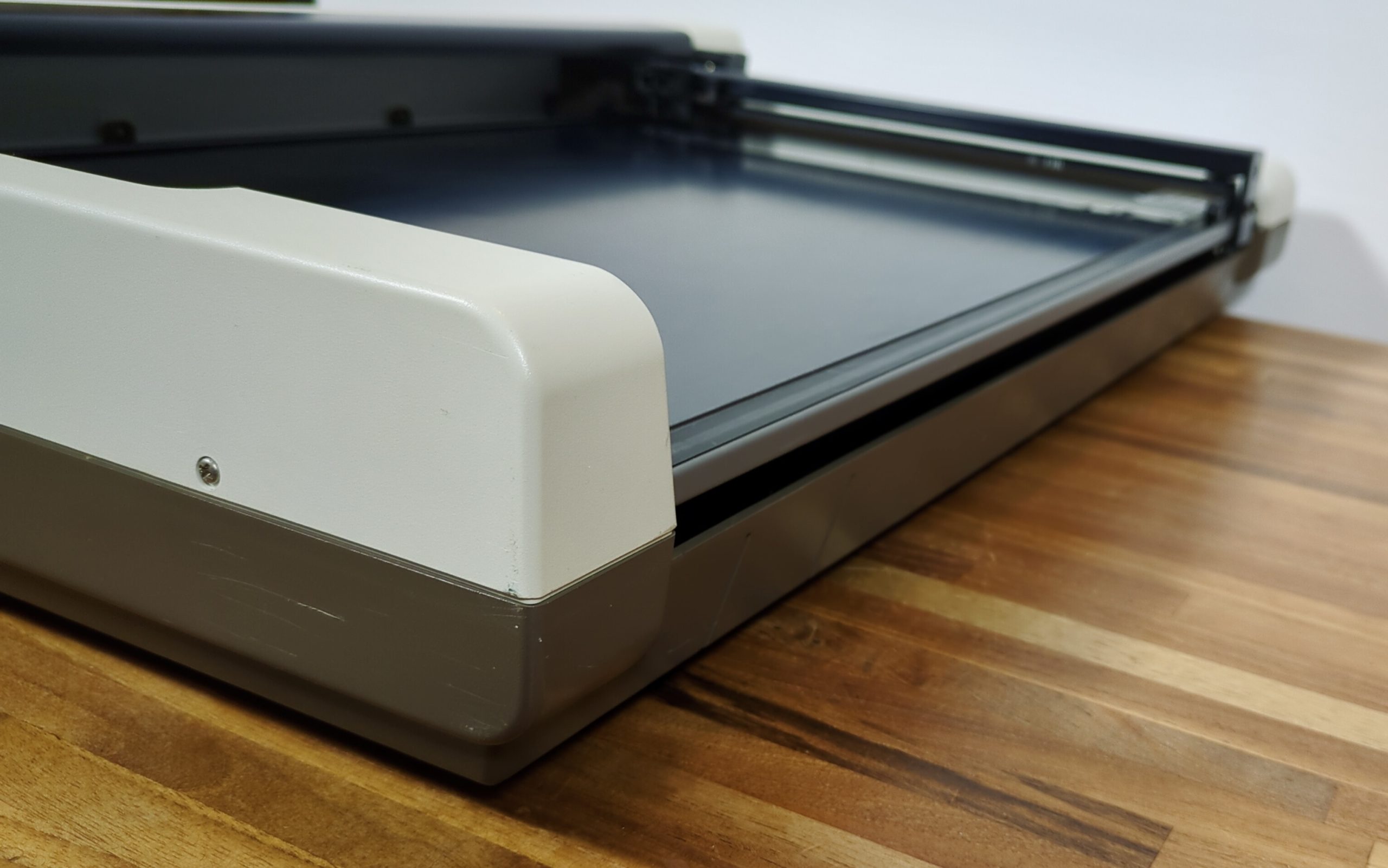
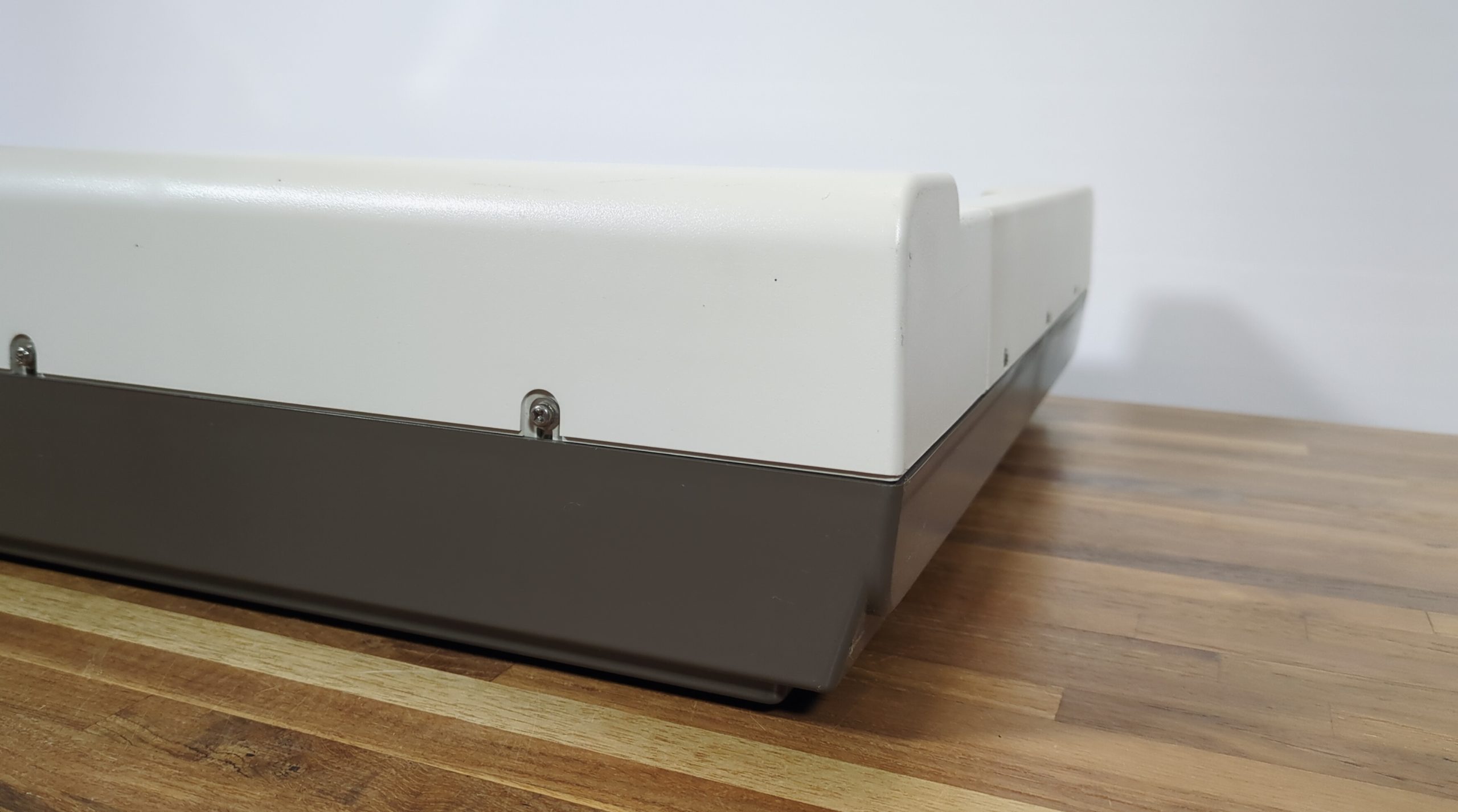
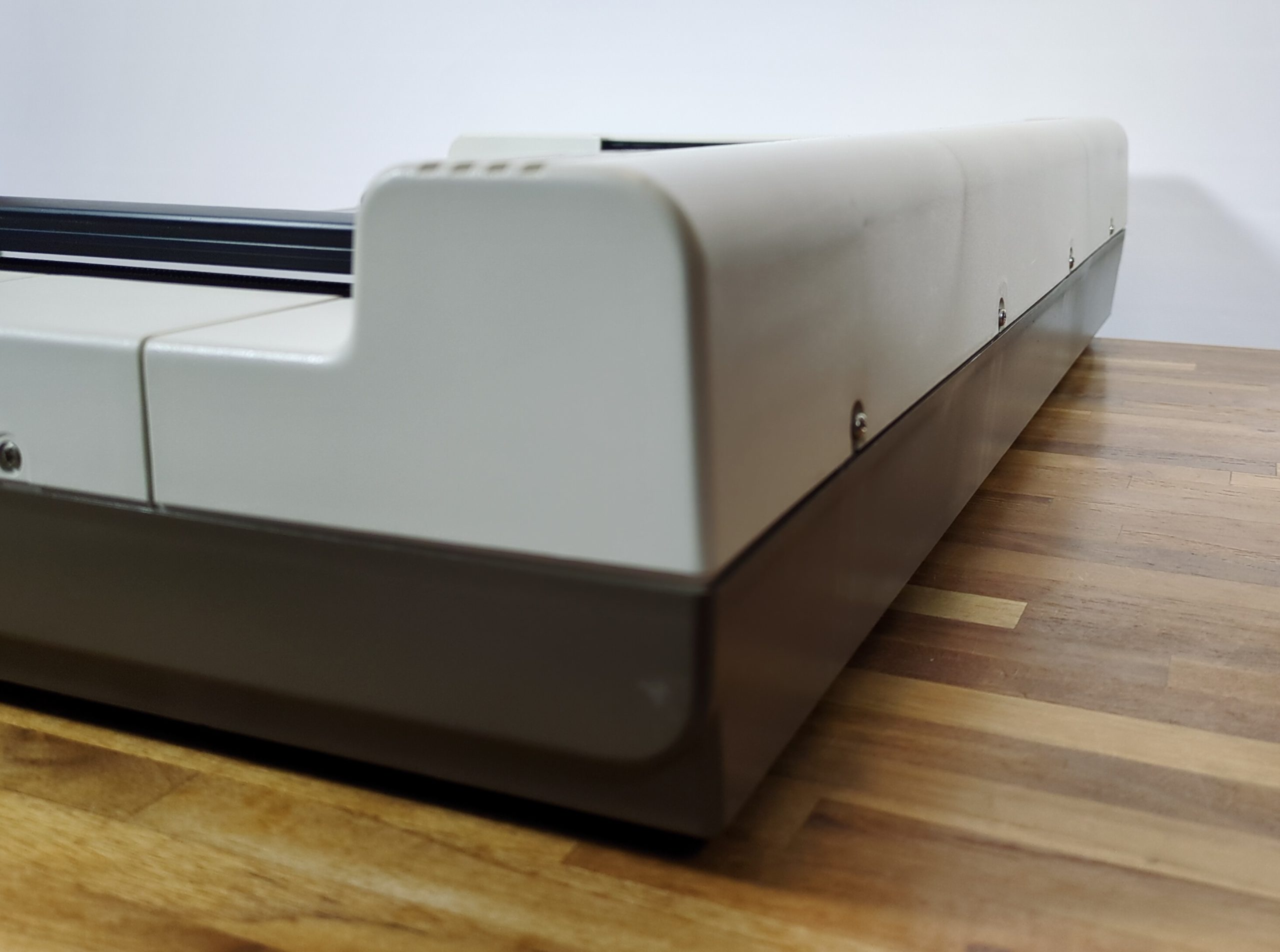
Cosmetic condition is reasonable. Some scuffs and scratches are present, but nothing is broken.
Note: The plotter came originally with a stand –as seen on a picture found online, but this stand is missing. As well as the original manual. In fact, we couldn’t find the manual online for this model.
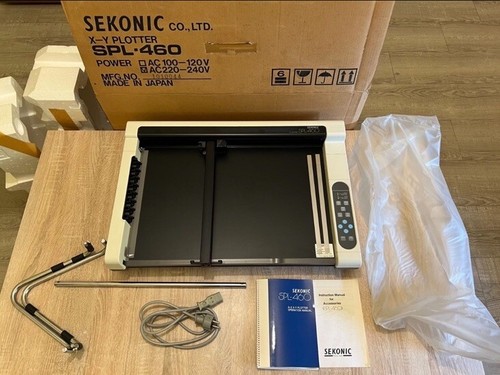
Sekonic SPL-460 image from online auction

Who Is This For?

Collectors who want the rare 8-pen flatbed in their lineup; artists and makers who want a quiet machine that handles heavier media than a gritwheel plotter. It slots into the same workflow as the famous HP or Roland plotters.

Includes: plotter, power cable.

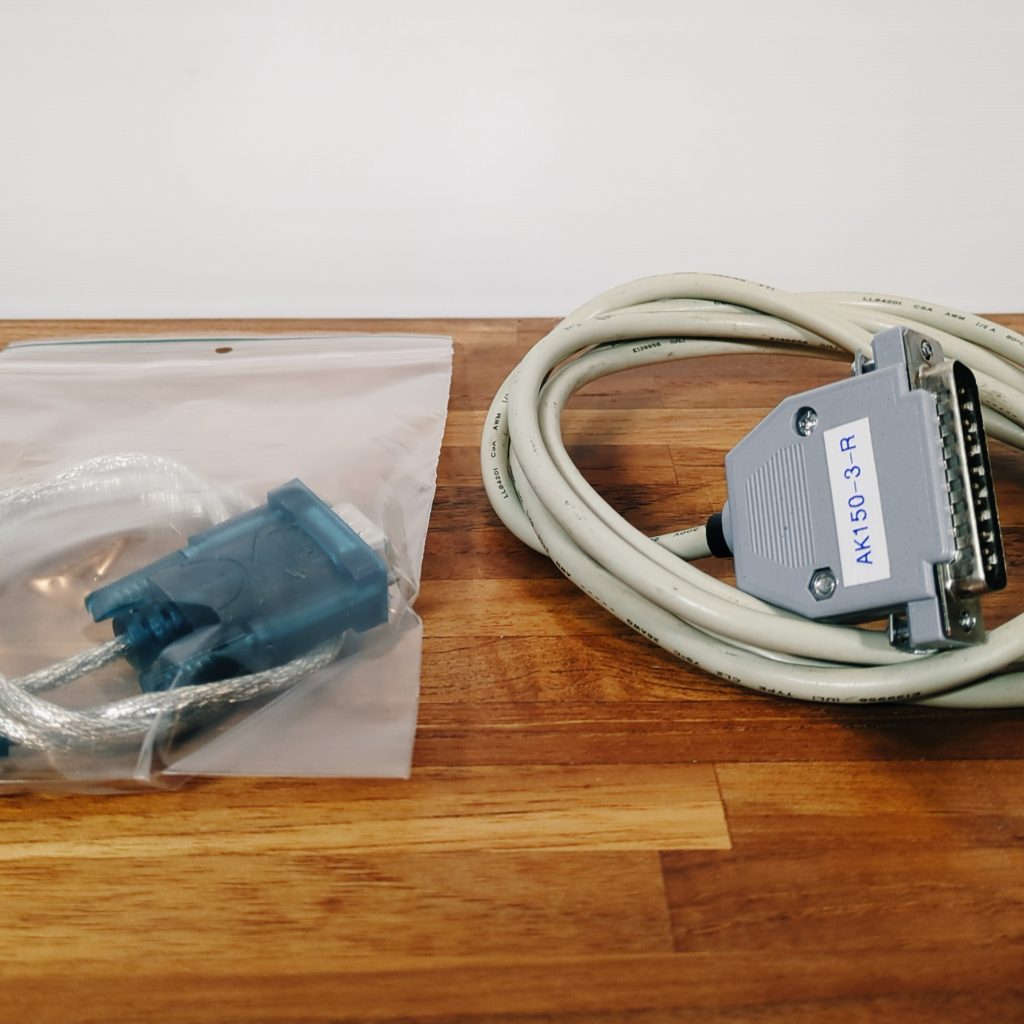
Extras: Add our serial starter-pack from the shop to get this plotter connected to your computer without much effort.

Please contact us for more info on this product.


Vintage electronics are sold tested, serviced and working, as-is. 

We prefer local pick-up, but if not possible, we will ship insured only. Shipping weight is approximately 15kg.
 

Reviews

There are no reviews yet.

Be the first to review “Sekonic SPL-460 X-Y Plotter – For Sale”

Your email address will not be published. Required fields are marked *


Related Products

FAQ

Pen plotting technology is a unique printing method that employs a mechanical arm to accurately draw designs on various media, such as big size paper or fabric. This technology is often used for creating intricate and detailed artworks nowadays, where in the nineties it was mostly used in PCB and electronic schematic design and Architectural/CAD design businesses.

A pen plotter is a specialized computer controlled printing device that uses a pen to draw very precise, high-quality graphics on paper.

You can compare it to a modern 3D printer, but it uses the Z-axis only to lift the pen up from the paper. 

We have plotters where the paper is static on the bed and where the arm moves in X and Y direction. We also have plotters that pull the paper back and forth and where the arm only moves in one direction. 

There is also a kind that can freely travel, like the Pen Mouse. These are fun, but we don’t use this for serious business. 

Modern inktjet plotters are pretty fast, use ink cartridges and produce photo quality prints. They are all around us and some versions are even found in homes. We like the old vintage plotters, because they challenge us. They are not easy to operate, often break and require care and attention. Watching the pen slowly working to the endresult is above all very pleasing and satisfying to watch. 

We have a bunch of them in working and none working condition. We dedicated a page on them here. 

Vintage plotters are not easy to find secondhand anymore. We have bought some plotters that were stored in moist environments and needed lot’s of maintenance and repairs. The costs are often much higher than the profit. So not at the moment, but maybe some day when commercially feasable. 

For black and white, we use new old stock disposable or refillable Rapidoplot or Koh-i-Noor plotter pens. They are quite similar to Rotring technical drawing pens. 

For color we use various pens, felt tip, to ink pens, whatever fits the plotter. (speed, pressure, size)

Designing or creating code various depending on complexity. The plotting process itself can take anywhere between 30 minutes for small plots to even 5 hours for A1 plots. This is depending on pen travel distance, complexity and maximum usable drawing speed. 

Pen plots are expensive due to the specialized equipment, quality materials and expertise involved. The complexity and duration of the plotting process add to the cost. We provide a high-quality niche product that guarantees excellent results for our clients.

You will receive a product with a distinct and unique quality.

Pen plotting requires careful preparation. Both the pens and the media need to be set up properly. It’s important to do a few test plots before starting the actual one. After these steps, the main plot should go smoothly. Subsequent plots require less effort. After plotting, regular maintenance of the pens is important, as they can dry out quickly.

We ship large formats rolled. Small, less bendable products mostly flat. When appropriate we’ll use postbox sized packaging, to keep (shipping) costs down.

We ship to most countries from our HQ in The Netherlands. Except for some countries that are notorious for losing packages.

We use PostNL postal services with tracking and optional insurance. 

Contact us if you have special requests. 

That can be arranged. Contact us for possibilities. 

Contact us and we’ll figure something out.

We want your vintage pen plotter art to bring you joy. If it doesn’t quite fit, here’s how we handle returns and exchanges:

  • You have 14 days from delivery to notify us of a return or exchange request.
  • The Process:
    1. Contact us at hello@penplot.studio so we can resolve the issue.
    2. Condition: Items must be returned in original, undamaged condition (unframed, no folds/creases) and packed securely.

Damaged on Arrival? Contact us immediately with photos at hello@penplot.studio. We’ll replace your plot (only once per order) or issue a full refund, covering all shipping costs. 

Intrigued by our lines or ready to create something new? Let's plot it out together.

Mail us at hello @ penplot.studio or use the contact form.

Note: We’re not interested in ads, spam and other productivity undermining emails.